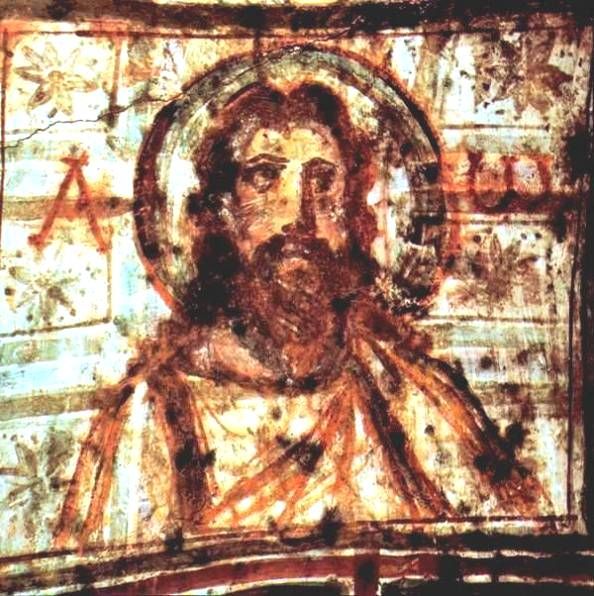
‘If Only’ Pondering

What does ‘if only‘ pondering mean? When we pray, we often pray for an outcome. If only I had a house, if only I had a raise if only, I was married, well, wealthy… The prayers are doubtful asks. We are not praying to God because He is God. We are praying to God asking Him to prove He is the God of the way, the truth, and the life.
Our relationship with God is not founded on what He can do for us. It is founded on the fact that He sent His only begotten son to die for our sin. It is through faith that our relationship is real and solid. I believe that we do not often focus on the phrase, ‘only begotten son’ as demonstrating the depth and breath of His love for us. My question is, what if God had not sacrificed His Son for us, would we be crying ‘only if’? A statement that decries a state of darkness.

Like many in the Bible, we learn that once they ceased crying for things that they felt would improve their lives and coexist on the planet, the very same moment their circumstances changed. Their belief in our Almighty, Sovereign God took away the sting of their circumstances. As the sting dissipated, their vision cleared, and avenues illuminated alternatives that previously were not viewed. It is difficult to see in the dark, and in the blackness of night, you are blind. Jesus is the way, the truth, and the life. Through Him, there is light that leads the way. Our ‘only ifs’ seemingly rear their faces as selfless requests.

God is the I AM, not a God who must jump through hoops to prove Himself to us. ‘Only if’ we could understand the vastness of His love for us and enter prayer with the intention to deepen our relationship with Him and not to offer up a Christmas list at every turn.

Helpful Scriptures

Jesus is the Light

John 8:12. Jesus spoke to them again, saying, “I am the light of the world. Whoever follows me, will never walk in darkness, but have the light of life.“

Psalm 27:1. The Lord is my light and my salvation; whom shall I fear? The Lord is the strength of my life; of whom shall I be afraid?

Ephesians 5:8. For you were once darkness, but now you are light in the Lord. Walk as children of the light.

1 John 1:5. This is the message which we have heard from him, and declared to you, that God is light, and him there is no darkness at all.

Faith and Doubt.

Proverbs 3:4,6. Trust in the Lord, with all your heart, and lean not on your own understanding; in all your ways, submit to him, and he will make your paths straight.

Mark 9: 22-23. But if you can do anything, take pity on us, and help us. “If you can?“ Said Jesus. “Everything is possible for one who believes.”

Matthew 28:16,17. “Then the eleven disciples went to Galilee to the mountain, where Jesus had told them to go. When they saw him, they worshiped him; but some doubted.”

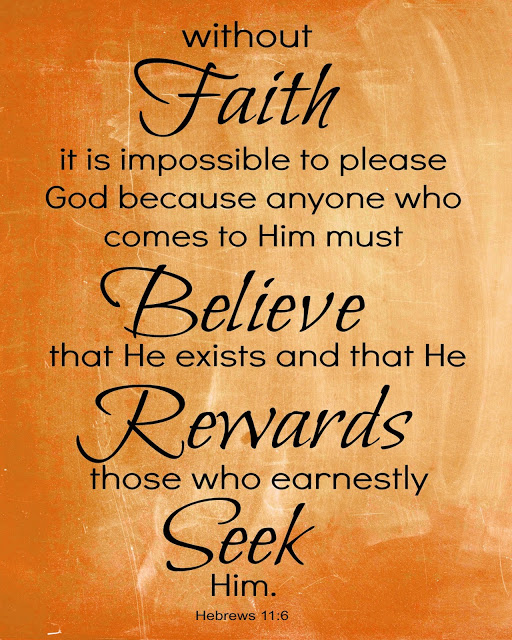
Hebrews 11:6. “And without faith, it is impossible to please, God, because anyone who comes to Him, must believe that He exists and that He rewards those who earnestly seek Him.”

James 1:2-7. “Considerate, pure joy, my brothers and sisters, whenever you face trials of many kinds, because you know that the testing of your faith produces perseverance. Let perseverance finish its work so that you may be mature and complete not lacking anything. If any of you lacks wisdom, you should ask God, who gives generously to all without finding fault, and it will be given to you. But when you ask, you must believe and not doubt, because the one who doubts is like a wave in the sea, blown and tossed by the wind.

Where doubt reigns, faith cannot abide. (Billy Graham) When we utter the ‘if only’s’ we are in essence doubting our maker, and faith cannot abide. When we doubt the ‘if only’s’ weaken our faith, in fact it renders it void. Our faith resides in the truth that Jesus is our Savior, who cares for us, directs us, and provides for us. Praise, and Thanksgiving should replace our ‘if only’s’.

Images: Hebrews 11:6, Highland Park Baptist Church; John 8:12, wiirocku.tumbler.com; Ephesians 5:8,9 Pinterest, Laura Huntington; @studentdevos

Scriptures: Jesus is the Light. Bible Verses About Jesus Christ, Light of the World. ccg.org; 10 Bible. Erases About Faith and Doubt. Jesus film.org; Biblegateway.org


DOVES AND THE MESSIAH

While reading the story about Jesus’ parents presenting him in the Temple, in Luke 2:22—40, I was struck by the parallels between the Old Testament and the New Testament. Maybe struck is not accurate, there was a different type of clarity I experienced (like an ah-hah moment). It is interesting that as we mature in the Word, the Word takes on greater life and our depth of understanding deepens. The focus of these verses conjoins Jesus being differentiated from other firstborn sons to standing out from other firstborn male children, which differentiates between, the act of following the Law of the Lord (shared by Moses) to that of following the Law of God (shared by Jesus); the announcement of prophecy of the coming of the Messiah to the actual enacting of the prophecy; and, God’s use of doves to bridge Jesus’ consecration as a child of God to that of becoming the divine essence of the Son of God.

In researching these verses, Wikipedia reported, “According to the gospel, Mary and Joseph took the Infant Jesus to the Temple in Jerusalem forty days (inclusive) after His birth to complete Mary’s ritual purification after childbirth, and to perform the redemption of the firstborn son, in obedience to the Torah.”

As we continued to read, we learned that Jesus’ parents followed the commands of the Torah and took Jesus to the Temple to receive redemption. We also learned that Simeon, a man of God, knew the child was the Messiah because God told Him he would arrive in the form of a man.

The scripture further reads, “When the time came for the purification rites required by the Law of Moses, Joseph, and Mary took him to Jerusalem to present him to the Lord as it is written in the Law of the Lord.” Every firstborn male is to be consecrated to the Lord, and to offer a sacrifice in keeping with what is said in the Law of the Lord: Every family was to offer a sacrifice of either a pair of doves or two young pigeons.

As the story continues, we learn that “there was a man in Jerusalem called Simeon, who was righteous and devout. He was waiting for the consolation of Israel, and the Holy Spirit was on him. It had was to him by the Holy Spirit that he would not die before he had seen the Lord’s Messiah. Moved by the Spirit, he went into the temple courts. When the parents brought in the child Jesus to do for him what the custom of the Law required, Simeon took him in his arms and praised God, saying: “Sovereign Lord, as you have promised, you may now dismiss your servant in peace. For my eyes have seen your salvation, a light for revelation to the Gentiles, and the glory of your people Israel.” Luke 2:22-30, 32 NIV

Not only did Simeon announce Jesus was the Messiah, but an old woman, a Prophet, confirmed it as well.

As time progresses Jesus is baptized by John. This is another instance we find doves as a centerpiece of the story.

”The next day John saw Jesus coming toward him and said, “Look, the Lamb of God, who takes away the sin of the world! I myself did not know him, but the reason I came baptizing with water was that he might be revealed to Israel.” Then John gave this testimony: “I saw the Spirit come down from heaven as a dove and remain on him. And I myself did not know him, but the one who sent me to baptize with water told me, ‘The man on whom you see the Spirit come down and remain is the one who will baptize with the Holy Spirit.’“
‭‭John‬ ‭1‬:‭29‬, ‭31‬-‭33‬ ‭ESV‬‬

I find this type of study during differing times of my life to be enlightening. It gives me joy, hope, and a sense of peace knowing that God’s Word never fails us as we mature as Christians. The story continuously unfolds and becomes more magnificent by the day.

After three days they found him in the temple courts, sitting among the teachers, listening to them and asking them questions. Everyone who heard him was amazed at his understanding and his answers. When his parents saw him, they were astonished. His mother said to him, “Son, why have you treated us like this? Your father and I have been anxiously searching for you. Why were you searching for me?” he asked. “Didn’t you know I had to be in my Father’s house? Then he went down to Nazareth with them (his family) and was obedient to them. But his mother treasured all these things in her heart. And Jesus grew in wisdom and stature, and in favor with God and man.“
‭‭Luke‬ ‭2‬:‭46-52 NIV

NOTE – His mother became a believer long before the other members of the family. She cherished each moment she observed His growth, as all mothers do when watching their child develop into an adult.

Thoughts in a Nutshell:

  1. Both the Torah and the Old Testament revealed that consecrating the firstborn male son of a family had to be redeemed by the Pharisees, and the family had to bring a sacrifice of two doves or pigeons to complete the ritual. This is important because when John baptized Jesus, God sent a dove that lit on Jesus. The dove was a symbol the Lord used to link Jesus to the Lord. Symbolism was important throughout the Old Testament, in that few people knew how to read, and the Torah/Old Testament was only available to religious leaders. The parallels were a means to connect prophecy, the unfolding of Jesus’ life that ended in the crucifixion and ascension of Christ, the New Testament, and the end times.
  2. Joseph was the father (stepfather) of Jesus and raised Him as His own. We were adopted and God invited us into His family as His own.
  3. Many revelations that are missed when studying the different Books of the Bible independently, cannot be understood without referencing the information in the New Testament to that of the Old Testament.

Images: 1. Catholic Daily Reflections; 2. IDS.org; 3. Gospelimages.com; 4. Nationalshrine.org

Resources: Bible.org, Biblegateway.org, Wikipedia

Ephesians 6, Put On Your Armor

Quote

Let peace be our aim as the wiles of the devil attempts to destroy us. The devil is here to kill, steal, and destroy. We must be prepared for his attacks, especially when we feel vulnerable. Steady yourself each morning by putting on the Armor of God. Pray on your knees speaking the prayer, not in your head. Cover yourself from the attacks of Satan.

I like William Barclay’s explanation of Paul’s command to us. It’s a great visualization and explanation.

——

The Armor of God

6:10-20 Finally, be strong in the Lord and in the power of his strength. Put on the armour of God. so that you may be able to stand against the devices of the devil. It is not with blood and flesh you have to wrestle, but against powers and against authorities, against the world rulers of this darkness, against malicious spiritual forces in the heavenly places. Because of this you must take the armour of God that you may be able to stand against them in the evil day, and that you may be able to stand fast, after you have done all things which are your duty. Stand with truth as a belt about your waist. Put on righteousness as a breastplate. Have your feet shod with readiness to preach the gospel of peace. In all things take faith as a shield for with it you will be able to quench the flaming darts of the evil one. Put on the helmet of salvation. Take the sword of the Spirit, which is the word of God. Keep praying in the Spirit at every crisis with every kind of prayer and entreaty to God. To that end be sleepless in your persevering prayer for all God’s consecrated people. Pray for me that I may be allowed to speak with open mouth, and boldly to make known the secret of the gospel, for which I am an envoy in a chain. Pray that I may have freedom to declare it, as I ought to speak.

As Paul takes leave of his people he thinks of the greatness of the struggle which lies before them. Undoubtedly life was much more terrifying for the ancient people than it is for us today. They believed implicitly in evil spirits, who filled the air and were determined to work men harm. The words which Paul uses, powers, authorities, world-rulers, are all names for different classes of these evil spirits. To him the whole universe was a battleground. The Christian had not only to contend with the attacks of men; he had to contend with the attacks of spiritual forces which were fighting against God. We may not take Paul’s actual language literally; but our experience will tell us that there is an active power of evil in the world. Robert Louis Stevenson once said: “You know the Caledonian Railway Station in Edinburgh? One cold, east windy morning, I met Satan there.” We do not know what actually befell Stevenson but we recognize the experience; we have all felt the force of that evil influence which seeks to make us sin.

Paul suddenly sees a picture ready-made. All this time he was chained by the wrist to a Roman soldier. Night and day a soldier was there to ensure that he would not escape. Paul was literally an envoy in a chain. Now he was the kind of man who could get alongside anyone; and beyond doubt he had talked often to the soldiers who were compelled to be so near him. As he writes, the soldier’s armour suggests a picture to him. The Christian too has his armour; and part by part Paul takes the armour of the Roman soldier and translates it into Christian terms.

There is the belt of truth. It was the belt which girt in the soldier’s tunic and from which his sword hung and which gave him freedom of movement. Others may guess and grope; the Christian moves freely and quickly because he knows the truth.

There is the breastplate of righteousness. When a man is clothed in righteousness he is impregnable. Words are no defence against accusations but a good life is. Once a man accused Plato of certain crimes. “Well then,” said Plato, “we must live in such a way as to prove that his accusations are a lie.” The only way to meet the accusations against Christianity is to show how good a Christian can be.

There are the sandals. Sandals were the sign of one equipped and ready to move. The sign of the Christian is that he is eager to be on the way to share the gospel with others who have not heard it.

There is the shield. The word Paul uses is not that for the comparatively small round shield; it is that for the great oblong shield which the heavily armed warrior wore. One of the most dangerous weapons in ancient warfare was the fiery dart. It was a dart tipped with tow dipped in pitch. The pitch-soaked tow was set alight and the dart was thrown. The great oblong shield was made of two sections of wood, glued together. When the shield was presented to the dart, the dart sank into the wood and the flame was put out. Faith can deal with the darts of temptation. With Paul, faith is always complete trust in Christ. When we walk close with Christ, we are safe from temptation.

There is salvation for a helmet. Salvation is not something which looks back only. The salvation which is in Christ gives us forgiveness for the sins of the past and strength to conquer sin in the days to come.

There is the sword; and the sword is the word of God. The word of God is at once our weapon of defence against sin and our weapon of attack against the sins of the world. Cromwell’s Ironsides fought with a sword in one hand and a Bible in the other. We can never win God’s battles without God’s book.

Finally, Paul comes to the greatest weapon of all–and that is prayer. We note three things that he says about prayer. (a) It must be constant. Our tendency is so often to pray only in the great crises of life; but it is from daily prayer that the Christian will find daily strength. (b) It must be intense. Limp prayer never got a man anywhere. Prayer demands the concentration of every faculty upon God. (c) It must be unselfish. The Jews had a saying, “Let a man unite himself with the community in his prayers.” I think that often our prayers are too much for ourselves and too little for others. We must learn to pray as much for others and with others as for ourselves.

Finally, Paul asks for the prayers of his friends for himself. And he asks not for comfort or for peace but that he may yet be allowed to proclaim God’s secret, that his love is for all men. We do well to remember that ever Christian leader and every Christian preacher needs his people to uphold his hands in prayer.

William Barclay’s Daily Study Bible Ephesians 6, Studylight.org

After reading this. Visualize the picture with you sitting in God’s peace in quiet meditation and let the Holy Spirit speak to you and calm your nerves before you head out for the day.