Over 6,000 BSF global members are studying the Book of Romans this year. Below is a synopsis of this study. Today’s scripture is from the Bible app.
Paul explained in Galatians 1:10 AMP that our purpose is not to impress or try to please man but rather focus on God.
The NLT.com
In Romans 1:16 he wrote: For I am not ashamed of the gospel, because it is the power of God that brings salvation to everyone who believes: first to the Jew, then to the Gentile.” (Romans 1:16)
Instagram
What was pertinent then is pertinent today. The methods of people pleasing and popularity changes over time, but very much remains the same. Christ has always been the answer.
The Book of Romans expounds on this subject.
I recently had a conversation with a friend about this scripture and the impact of social media on young people today, especially the influencers who are committing suicide in such substantial numbers. This scripture speaks to their dilemma. Are they seeking to please someone or are they trying to follow Christ? Most of them are trying to be popular with men and in so doing the extreme is losing themselves. Living in a void that only sees the image they have created and not the true image of themselves. This scripture is pertinent to our society today, because it’s not just the influencers that are online, it is the public face that so many people try to project to the point where they really lose the essence of who they are in Christ. I am going to find this to be an interesting study this year and will share more from time to time.
Romans: The World’s Most Influential Letter (Excerpt from the BSF study guide)
Introduction Lesson Notes:
Overview
Focus Verse
“For I am not ashamed of the gospel, because it is the power of God that brings salvation to everyone who believes: first to the Jew, then to the Gentile.” (Romans 1:16)
Outline
· The Influence of Romans
· The Background of Romans
· An Overview of Romans
Engage
People everywhere long for connection and community, yet division often dominates our world. Differences in political views and theological perspectives often create tension and break relationships. Crime and corruption go unchecked, and tolerance is demanded—but only for what is popular. Those who follow Christ are often mocked and marginalized.
These challenges are not new. When Paul wrote from Corinth to the early Christians in Rome, they faced similar struggles. Under the guidance of the Holy Spirit, Paul penned one of the most influential letters ever written—the book of Romans. In it, Paul explained the good news of Jesus and how the salvation He offers changes everything. The gospel has the power to bring all people from guilt to grace. As we begin this new year studying God’s Word, we will discover how Romans speaks to life’s biggest questions and deepest difficulties. It teaches us about salvation, grace, and the new life we have in Christ. Romans explains timeless, essential truths for today and eternity.
While watching an episode of a television series recently, I saw a scene where a character who had passed away found herself standing before an endless line of people she had affected during her lifetime. In that moment, she realized something she had doubted for much of her life: she was God’s child, and her life had a purpose.
Although the scene was fictional, it prompted me to think about something very real: How many lives do we touch during our lifetime—often without ever realizing it?
Scripturally, we know that when we enter heaven, our focus will be completely on God and His glory rather than on the things of this world. Yet the scene caused me to reflect on the influence we have while we are here. God can use our lives in ways we may see, and in countless ways we may never know.
Jesus reminds us, “You are the light of the world” (Matthew 5:14). He also tells us to let our light shine before others so that they may see our good works and glorify our Father in heaven (Matthew 5:16). Our responsibility is not necessarily to know the outcome of every act of kindness or every word of encouragement. Our responsibility is to faithfully allow God to work through us.
Think about it: How many lives do you think you have touched up to this point in your life?
We naturally recognize our influence on family and friends. We may also recognize it when we give to humanitarian causes, volunteer, or help someone in need. But what about the moments that seem insignificant?
What about the stranger you pass on the street?
What about the store clerk who unexpectedly shares a personal struggle with you? Do you offer to pray with them right there? Do you ask the name of the person they are concerned about so you can add them to your prayer list?
What about writing a brief prayer or sharing a Scripture verse with someone who needs strength and encouragement? What about simply smiling at someone as you pass and telling them to have a blessed day?
And when you drive past an accident or hear about a catastrophe in the news, do you pause and pray for those who are suffering?
These moments may seem small to us, but nothing done in love for God is insignificant.
The apostle Paul reminds us, “Let us not grow weary while doing good, for in due season we shall reap if we do not lose heart” (Galatians 6:9). He goes on to encourage us, “As we have opportunity, let us do good to all” (Galatians 6:10).
Notice those words: as we have opportunity.
Every day gives us opportunities to represent Christ. Some opportunities are obvious; others are so ordinary that we may not recognize them at all. Yet God can take a simple conversation, a prayer, a kind word, a smile, or an act of compassion and use it for His purposes.
This is a recurring theme of my blog. During prayer God continues to press on my heart that we are to remain steadfast in our Christian walk.
God does not need our help, but He graciously chooses to work through His people. Scripture calls us to “bear one another’s burdens” (Galatians 6:2), to “pray for one another” (James 5:16), and to put our faith into action. James reminds us that faith is demonstrated by what we do (James 2:17).
We are called not simply to believe in Christ, but to live as His disciples.
Sometimes we will know that God has used us. We may see the encouragement on someone’s face, hear how a prayer was answered, or discover years later that something we said made a difference.
But there will also be countless times when we will never know.
Perhaps someone remembered your kindness on a difficult day or a prayer you prayed quietly became part of God’s answer in someone else’s life. Or, a Scripture you shared gave someone the strength to keep going, or your willingness to listen made someone feel seen when they felt completely alone.
The truth is that we may never see the full picture on this side of heaven and why our calling is faithfulness, not recognition.
Paul writes, “Whatever you do, do it heartily, as to the Lord and not to men” (Colossians 3:23). We do not serve others so that they will remember our names. We serve because we belong to Christ.
So, I encourage you to take a moment today and consider how you are living as a disciple of Christ.
Ask yourself: Who might God place in my path today? How can I be His hands, His feet, His voice, or simply His love to someone who needs it?
Begin each morning by inviting God to use you throughout the day. Ask Him to open your eyes to the opportunities you might otherwise overlook.
Sometimes you will recognize when God is working through you. Other times, you may never know and that is part of the beauty of faith.
We do not need to see the entire impact of our obedience. We simply need to be willing.
“Here I am! Send me.” — Isaiah 6:8
Live faithfully. Pray intentionally. Love generously. Encourage freely.
You never know whose life God may touch through you.
And one day, in ways we cannot imagine now, we may discover just how much our willingness to be used by God mattered.
Scriptures that highlight this message
Matthew 5:14–16 — We are the light of the world and are called to let that light shine. This is the central Scripture for the article.
Galatians 6:9–10 — Encourages us not to grow weary in doing good and to do good whenever we have opportunity. This supports the theme of small acts.
Colossians 3:23–24 — Reminds us to do everything wholeheartedly for the Lord rather than for human recognition. This reinforces the point that faithfulness matters even when we never see the results.
James 2:17 — Faith without corresponding action is dead. This supports the statement that discipleship is more than simply believing.
Galatians 6:2 — “Bear one another’s burdens.” There is a natural connection to praying with people and helping them through difficult circumstances.
James 5:16 — “Pray for one another.” Particularly proper for the examples of praying for strangers, people in need, and those affected by tragedy.
1 Corinthians 15:58 — Encourages believers to be steadfast and assures us that our labor in the Lord is not in vain.
Isaiah 6:8 — “Here I am! Send me.” This Scripture is a personal invitation to be available for God’s purposes.
God always connects the dots: Shine your light → faithfully do good → trust that your labor matters, even when you cannot see the results.
Written by Lisa Blair. Scriptures that highlight the message acquired via ChatGPT query. Free images from Google Photos.
We all lack wisdom when needed most. When things become challenging, we tend to overlook the fact that we have God given wisdom and simply need Him to direct us. This verse simply reinforces that we have wisdom and need to calm down, take a beat, reconnect with our source and allow God to direct us.
When do we receive the gift of wisdom?
We were gifted with wisdom when we became Christians and received Christ as our Lord and Savior.
Is there a way I can speak of the Lord’s faithfulness throughout my life to someone I meet today? Lord, may I be sensitive to the opportunities I may have with people I meet today. (Lectio, May 27, 26) Are you struggling to do your part in God’s unfolding story?
We long to play our part in God’s unfolding story—but how can we step into that calling if we do not truly know who we are? So many of us have allowed others to define us. Our identity became shaped by labels spoken over us—some careless, some wounding, some simply untrue. We learned to live as the version of ourselves others expected, not the person Christ redeemed.
Yet in Christ, we put on our true name. A name rooted not in brokenness, but in belovedness. A name spoken by the One who formed us, called us, and set His Spirit within us.
Today is the day to lay down every false label, which are the things that are the opposite of what He says we are.
God said we are special, chosen, lovely and unique, we are strong, courageous, smart, kind, compassionate, trustworthy, giving, dedicated, loving and have self control.
Today we release the labels/identities that were never ours to carry and to step into the truth of who Christ says we are.
Image by ChatGPT
Romans 12:2 instructs us not to conform to the pattern of the world. What patterns was Paul telling us not to confirm to? The patterns are the labels placed upon us. Paul said to transform through the renewing of your mind so that we will no longer be captives of the false narrative.
We can find comfort in transforming from who we thought we were to who we truly are because God’s truth empowers us, it sets us free, and is anchored in His unconditional love.
When we begin to walk in the identity God gave us before our birth, we become strengthened to take our rightful place in His unfolding story. Shame loses its grip. Fear loosens its hold. And we find the courage to share our lives—and our faith—with others. Once we are no longer held captive by our false narrative, hiding from who we are, we can speak openly of who Christ is within us. With confidence, humility, and joy, we step into the role God has written for us in His great and beautiful story.
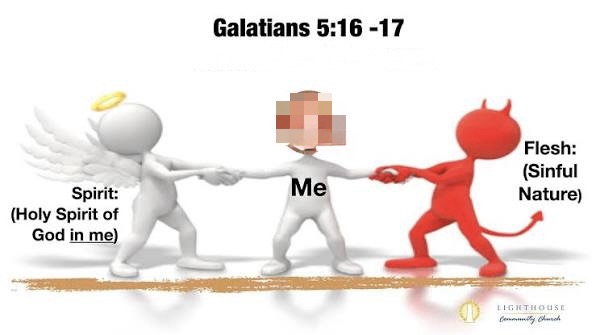
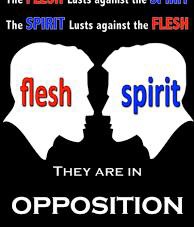
“So I say, let the Holy Spirit guide your lives. Then you won’t be doing what your sinful nature craves. The sinful nature wants to do evil, which is just the opposite of what the Spirit wants. And the Spirit gives us desires that are the opposite of what the sinful nature desires. These two forces are constantly fighting each other, so you are not free to carry out your good intentions.” ~ Galatians 5:16-17 NLT
In these verses, the Apostle Paul offers the ultimate solution to overcoming selfish and sinful tendencies. It focuses on three main concepts:
Walk by the Spirit: To “walk” means to live, conduct your life, and make daily decisions. To “walk by the Spirit” means relying on the Holy Spirit’s guidance and power rather than your own strength.
The Flesh: This refers to human nature apart from God—our natural, selfish inclinations, compulsions, and desires that lead to sin.
The Promise: Paul presents this as a cause-and-effect relationship. As you actively focus on and surrender to the Holy Spirit’s leading, you lose the drive to fulfill the desires of your sinful nature.
The verses acknowledge an ongoing internal struggle (detailed in verses 17-23) between what your natural self wants and what God’s Spirit desires.
Paul’s message is that victory does not come from strictly following a list of rules; rather, it happens naturally by cultivating a daily relationship with God.
Key Takeaways:
Continue to deepen your relationship with the Lord through short prayers and expressions of gratitude throughout the day.
Tether yourself to the Holy Spirit who lives in you. He is not a guest; he is a resident.
Resist your earthly desires. It will require prayer and positive self-talk.
Listen to the Holy Spirit who will serve as your cheerleader as you separate your wants from your spiritual needs.