God keeps speaking to me about forgiveness, telling me to share this message with you. ‘It is time to forgive and move forward with your life’. Recently I wrote two posts about forgiveness and today my sister sent me a message on forgiveness that seems to tie it altogether. He is speaking to me in the same way He is speaking to you. We have all been hurt, we have all hurt others. We have all been bound by the sin of unforgiveness. 2026 is our year to forgive and move forward.
Please listen to Lysa TerKeurst’s message. She is a renown speaker and many of you have read her books. This may be one of her most profound messages that will free you from unforgiveness if you are still struggling with God’s command to FORGIVE.
I was listening to Gospel/Christian music this morning, and a song titled “I Forgive Me” by Soul Medicine was playing as I jogged. I believe one of the greatest challenges we face is not forgiving others—it is learning to forgive ourselves. We are both our own best friends and our own worst enemies. We are both saved by grace and sinners. God forgives us but in opposition, Satan tirelessly undermines our blessing by introducing doubt.
Biblestudytoold.com
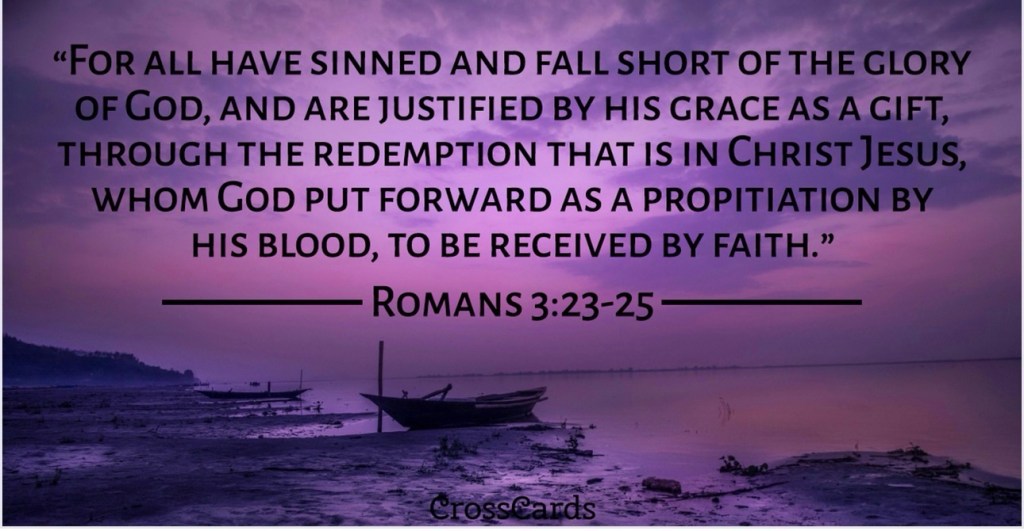
If we doubt and listen to our own negative self-talk we are negating God’s forgiveness. We must learn to master the authority God gave us to silence the voice Satan whispers in our minds. His voice is very convincing, His temptation is seductive to ignore. After we succumb, he accuses us of our wrongdoing and tells us we are shameful. To truly accept God’s grace, we must learn to silence the voices of doubt and shame. We are willing to accept God’s forgiveness but unwilling to forgive ourselves, thus negating God’s forgiveness. As long as we live in this world, we will struggle and fall short, but Christ’s sacrifice has freed us from eternal condemnation. While God’s forgiveness is assured, Satan works relentlessly to sow seeds of doubt. Doubt steals self-acceptance. When we listen to negative self-talk, we risk undermining the grace God has given us. Accepting God’s forgiveness means silencing the voices of shame and regret. If we do not do this, our past mistakes linger, holding us back from moving forward and fully embracing forgiveness.
Biblestudytools.com
God has given us the authority to silence the whispers of the enemy. However, Satan’s voice is persuasive and he continually tries to convince us we are beyond redemption. If we are beyond redemption, forgiving ourselves seems impossible. True acceptance of God’s grace requires us to master these doubts. When we do not forgive ourselves, we keep the memory of our sins alive, nullifying the freedom God offers.
To profoundly move forward, we must forgive ourselves as God forgives us—letting go of shame, silencing doubt, and embracing the new life Christ has made possible.
As true believers, let us embrace the power of forgiveness—not only towards others, but also ourselves. Just as God has graciously forgiven us, we are called to release self-doubt, shame, and regret, and to accept His grace wholeheartedly. This year, I encourage you to make self-forgiveness a priority, allowing God’s love to renew your spirit and guide you toward a future filled with hope and confidence.
During my nightly meditation, I reflected on peace—what it is and how to experience it—and God clarified this for me.
Whenever you do any of the following and trust in God’s Word—not simply say them but believe them—you will be at peace.
When you forgive, you are at peace.
When you give from your heart, you are at peace.
When you look at you day with no regrets of what could have been or what you lost, you are at peace.
When your prognosis is not what you wanted and you give the condition to God, no holding back, you are at peace.
When you wake up in the morning and praise God for another day, you are at peace.
When you listen to the news and rebuke the chaos, relying on God instead of succumbing to evil, you are at peace.
Prayers about peace.
Jeremiah 29:11 For I know the plans I have for you, declares the Lord, plans for welfare and not for evil, to give you a future and a hope.
Job 22:21 Agree with God and be at peace; thereby good will come to you.
John 14:27 “Peace I leave with you; my peace I give to you. Not as the world gives do I give to you. Let not your hearts be troubled, neither let them be afraid.”
Jude 1:2 May mercy, peace, and love be multiplied to you.
Luke 2:14 “Glory to God in the highest, and on earth peace among those with whom he is pleased!”
Philippians 4:7 And the peace of God, which surpasses all understanding, will guard your hearts and your minds in Christ Jesus.
Philippians 4:9 What you have learned and received and heard and seen in me—practice these things, and the God of peace will be with you.
Connectusfund.org. 50 Inspiring Bible Scriptures on Peace
A year or two ago, I wrote a post about forgiveness and sin. I feel led to continue the conversation. Matthew 6:14, NLT shares “For if you forgive men their trespasses, your heavenly father will also forgive you. But if you do not forgive men their trespasses, neither will your father forgive your trespasses.”
God teaches us that forgiveness is a gift—one that continues to give. When someone forgives, they become the giver, and another person becomes the recipient. This recipient may then reflect on the gift they received and choose to pass on the gift of forgiveness to someone else. By forgiving, your heart softens, allowing you to open the door to receive God’s forgiveness.
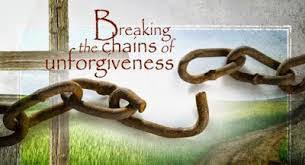
If you do not forgive others, the Lord will not forgive you. How can He? Sin and forgiveness cannot coexist. To be forgiven, you must let go of the sin that is holding you captive. Many of us know someone who is imprisoned by hate, anger, and disdain for someone who has wronged them. Who is truly hurting in this situation: the person harboring hate or the recipient of that hate? God does not want us to be bound by hate; instead, He desires for us to release it through repentance and forgiveness of those who have wronged us. He wants to set you free through your forgiveness.
Unforgiveness is sinful and stems from a lack of faith. This lack of faith robs you of your joy. It is impossible to feel hate and joy simultaneously; they cannot coexist. On the other hand, forgiveness is liberating. It is an expression of love, not directed at the person you are forgiving, but offered to our Lord and Savior. In turn, He acknowledges this change in your heart.
When you create space by forgiving others, God fills that space with His forgiveness for your own sins. This divine love fills you with joy, and that joy has a powerful impact. It opens the door for your renewed self to take control of your life.
Charles Stanley summarized it this way, “Through the grace of Jesus Christ, you have the spiritual resources to forgive others. When you release someone of a debt he or she owes, you were no longer bound by the spirit of unforgiveness or bitterness. You are free to see that individual as Christ does, anger no longer has the power to rule your life and decisions.
Forgiveness does not mean that what the person did was right. It means that you have turned him or her over to God. You are no longer holding on to the unforgiveness, and you are free to live fully for Jesus Christ.” (Life Principles Bible, Second Edition. pg. 1492)
The Misery of Sin, by Pastor Greg Laurie, Daily Devotional, April 22, 2022. Harvest Church.
“Restore to me the joy of your salvation, and make me willing to obey you.” Psalm 51:12
There’s a difference between sinning, knowing it, and being sorry for it and intentionally, habitually sinning again and again. If you’re a child of God, then you won’t habitually sin. You won’t be sinless, but you will sin less.
If you really have accepted God’s gift of salvation, then you will be unhappy and miserable when you’ve sinned. The Bible tells us in 1 John 3:9, “Those who have been born into God’s family do not make a practice of sinning, because God’s life is in them. So they can’t keep on sinning, because they are children of God” (NLT).
This verse doesn’t say that if you’re a child of God, you won’t sin because everyone sins all the time. But if you’re a child of God, then you won’t be happy after you sin, you’ll feel convicted and you’ll want to get right with God.
There are sins of commission and sins of omission. A sin of commission is when you do what you should not do, while a sin of omission is not doing what you should do. The Bible says, “If we say that we have no sin, we deceive ourselves, and the truth is not in us” (1 John 1:8 NKJV).
If you want to be unhappy, then have unconfessed sin in your life. Happiness does not come from sinning. Misery, guilt, and repercussions come from sinning. That is why the Bible says, “Oh, what joy for those whose disobedience is forgiven, whose sin is put out of sight!” (Psalm 32:1 NLT).
After David sinned against the Lord, he wrote, “Restore to me the joy of your salvation, and make me willing to obey you” (Psalm 51:12 NLT).
Jesus said, “Apart from me you can do nothing” (John 15:5 NLT). It isn’t hard to be a Christian—it’s impossible . . . without the help and power of the Holy Spirit.
Forgiveness is a difficult undertaking, however, if you trust in the Lord the difficulty will melt away. 
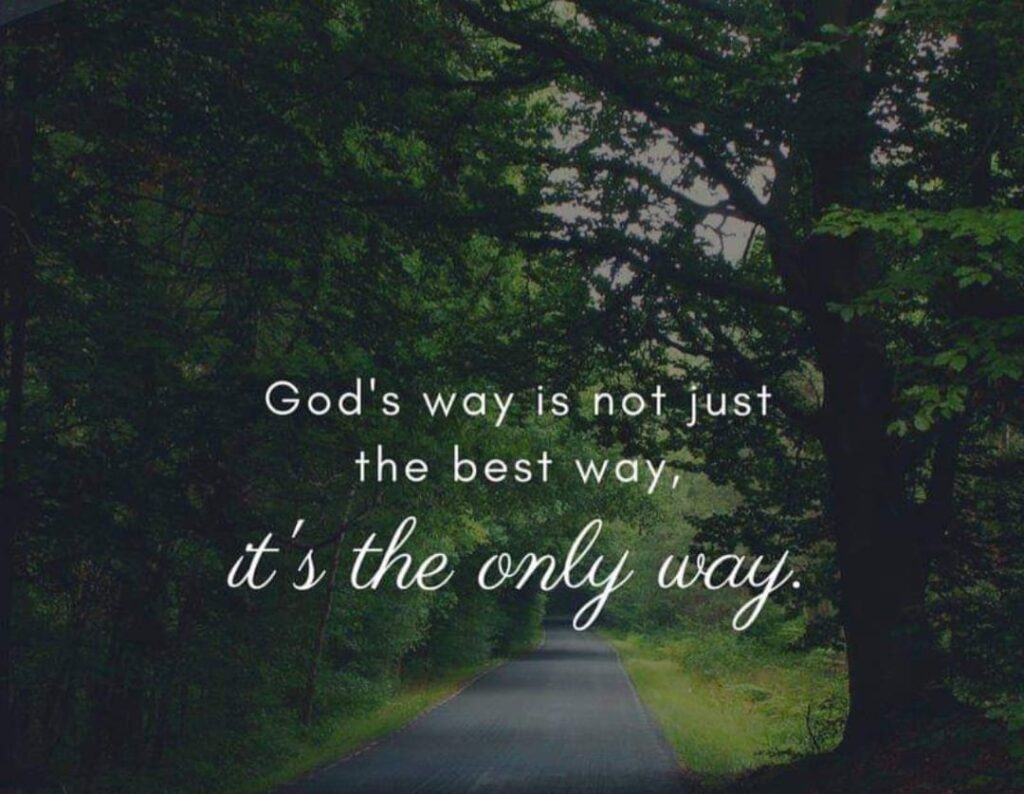
The road we walk is self-selected, but we are not doomed to walk the wrong path, God gave us a choice.
~ Lisa Blair
This is a long post, please bare with me.
Lisa Blair, designed using Word Swag
As Christians, we listen to God speak to us and then reinterpret what He said to continue down the path of self-interpretation. In short, we change how we should do what He said to soften the outcome. God’s primary command is to obey Him, yet we often choose to ignore His commands for our lives, thus the quote, “the road to hell is paved with good intentions. Our intentions are good but fall short of following His precept to be obedient. Obedience a requires 100% response. You cannot be 50%, or 75%, or 99.9% obedient. You are either obedient or you are not obedient, no matter the intention. God speaks to us, we either respond obediently or we disobey.
Take the case of Saul in Samuel 15.
Saul Disobeys the Lord
One day, Samuel told Saul:
The Lord told me to choose you to be king of his people, Israel. Now listen to this message from the Lord: 2 “When the Israelites were on their way out of Egypt, the nation of Amalek attacked them. I am the Lord All-Powerful, and now I am going to make Amalek pay!
The Kenites left, 7 and Saul attacked the Amalekites from Havilah[b] to Shur, which is just east of Egypt. 8 Every Amalekite was killed except King Agag. 9 Saul and his army let Agag live, and they also spared the best sheep and cattle. They didn’t want to destroy anything of value, so they only killed the animals that were worthless or weak.[c]
The Lord Rejects Saul
10 The Lord told Samuel, 11 “Saul has stopped obeying me, and I’m sorry that I made him king.”
Samuel was angry, and he cried out in prayer to the Lord all night. 12 Early the next morning he went to talk with Saul. Someone told him, “Saul went to Carmel, where he had a monument built so everyone would remember his victory. Then he left for Gilgal.”
13 Samuel finally caught up with Saul,[d] and Saul told him, “I hope the Lord will bless you! I have done what the Lord told me.”
14 “Then why,” Samuel asked, “do I hear sheep and cattle?”
15 “The army took them from the Amalekites,” Saul explained. “They kept the best sheep and cattle, so they could sacrifice them to the Lord your God. But we destroyed everything else.”
16 “Stop!” Samuel said. “Let me tell you what the Lord told me last night.”
“All right,” Saul answered.
17 Samuel continued, “You may not think you’re very important, but the Lord chose you to be king, and you are in charge of the tribes of Israel. 18 When the Lord sent you on this mission, he told you to wipe out those worthless Amalekites. 19 Why didn’t you listen to the Lord? Why did you keep the animals and make him angry?”
20 “But I did listen to the Lord!” Saul answered. “He sent me on a mission, and I went. I captured King Agag and destroyed his nation. 21 All the animals were going to be destroyed[e] anyway. That’s why the army brought the best sheep and cattle to Gilgal as sacrifices to the Lord your God.”
22 “Tell me,” Samuel said. “Does the Lord really want sacrifices and offerings? No! He doesn’t want your sacrifices. He wants you to obey him. 23 Rebelling against God or disobeying him because you are proud is just as bad as worshiping idols or asking them for advice. You refused to do what God told you, so God has decided that you can no longer be king.”
26 “No!” Samuel replied, “You disobeyed the Lord, and I won’t go back with you. Now the Lord has said that you can’t be king of Israel any longer.”
27 As Samuel turned to go, Saul grabbed the edge of Samuel’s robe. It tore! 28 Samuel said, “The Lord has torn the kingdom of Israel away from you today, and he will give it to someone who is better than you. 29 Besides, the eternal[f] God of Israel isn’t a human being. He doesn’t tell lies or change his mind.”
30 Saul said, “I did sin, but please honor me in front of the leaders of the army and the people of Israel. Come back with me, so I can worship the Lord your God.”
31 Samuel followed Saul back, and Saul worshiped the Lord. 32 Then Samuel shouted, “Bring me King Agag of Amalek!”
Agag came in chains,[g] and he was saying to himself, “Surely they won’t kill me now.”[h]
33 But Samuel said, “Agag, you have snatched children from their mothers’ arms and killed them. Now your mother will be without children.” Then Samuel chopped Agag to pieces at the place of worship in Gilgal.
34 Samuel went home to Ramah, and Saul returned to his home in Gibeah. 35 Even though Samuel felt sad about Saul, Samuel never saw him again. (1 Samuel 15, CEV.Biblegateway.com)
The Lord spoke to Samuel and instructed him to speak to Saul. Samuel told Saul to “Go and attack the Amalekites! Destroy them and all their possessions. Don’t have any pity. Kill their men, women, children, and even their babies. Slaughter their cattle, sheep, camels, and donkeys.”
When Saul reported back to Samuel, Samuel asked if he completed the mission as commanded. Saul said ‘yes’, but as my pastor said, Samuel could hear the sheep in the background. Samuel asked again and learned that Saul killed all of the Amalekites except King Agag and the best cattle and sheep. This was an act of defiance, disobedience. Best intentions?
In verse 22, Samuel said, 22” “Tell me,” Samuel said. “Does the Lord really want sacrifices and offerings? No! He doesn’t want your sacrifices. He wants you to obey him. 23 Rebelling against God or disobeying him because you are proud is just as bad as worshiping idols or asking them for advice. You refused to do what God told you…”
Rlfwc.com
When we begin to manipulate what God told us to do, the outcome is not the outcome God planned for us. Think back to when you were a child. Your parents told you to clean your room and then you can go out to play when you are done. Sound familiar, what did you do? Your friends are waiting for you, so you smoothed out your bed spread and pushed clothes and toys under your bed or in the closet. You called your mother, who entered your room and looked around, but since it only took a few minutes, knew something was amiss. She opened the closet, looked down and saw something sticking out from under the bed and turned around to address you. The result was not as planned, you were grounded and could not go out and play. The story is not about being grounded; it is about partial obedience. The moral of the story is that partial obedience does not result in the outcome you expected.
Faithfellowshioministries.net
This is the case when God instructs us in what to do. We try to get around the full request. Sometimes, it is because we are afraid. Sometimes it is because it may cause slight discomfort, and sometimes it just does not seem to be the answer we wanted, again like Saul who tried to justify his decision to only follow part of the instructions he had been given. All too often our intention to obey is lost in self gratification. You cannot receive the intended outcome if you fail to follow the full instructions.
Verse 24 reads, ““I have sinned,” Saul admitted. “I disobeyed both you and the Lord. I was afraid of the army, and I listened to them instead.” We often listen to our inner voice. The inner voice is our carnal voice governed by Satan. It is the same voice Eve heard in the Garden of Eden. The intention of this Post to remind us that we must discern the voices, who are we listening to, the voice of God or the voice of the evil one, the great impersonator.
I will go out on a limb and say, when we alter God’s instructions to fit our needs, we reap the results that look nothing like the intended outcome, instead we reap the consequences of being disobedient. We, like the child, find ourselves in a predicament we created by our defiance to do what we were told.
When we disobey the Lord, we are walking down the road paved by our good intentions, but it is not the road to heaven, it is the road to hell.
But this is not the end. The Book of Samuel is part of the Old Testament and Christ had not yet visited earth or had been crucified. The New Testament informs us that Christ died for our sins, and we have been freed from eternal, no escape, sin. We are not destined to walk down the paved road that leads to hell. God gave us the freedom to choose. We can follow Him if we choose or deny Him and live our lives relying on our own decisions, good intentions. I choose to live in a relationship with the Lord. Do I sin, certainly, I do, we all do, that is, until Christ returns to redeem us.
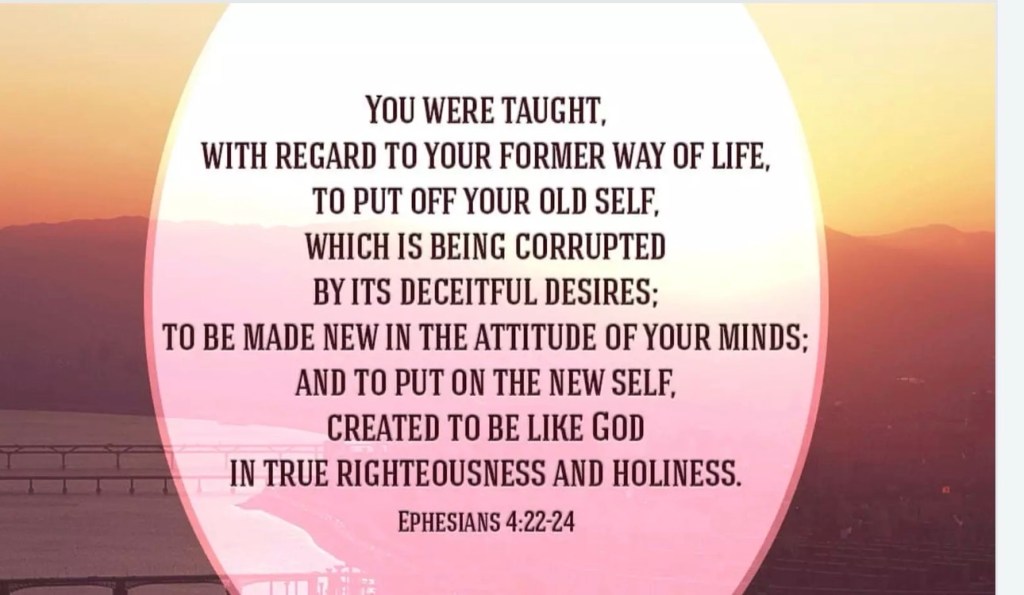
Life lessons provide wisdom to follow our Lord and live by His Word. As we mature, we more readily repent of the sin we committed and over time, no longer adhere to our old habits. We can choose to travel down the road paved by good intentions, or we can obey the Lord and change lanes from the road that leads to hell, that is – self affirming, manipulated intentions, or to coin another phrase, we can ‘begin to walk down the straight and narrow’ the best we can.
God tells us, ‘not to look to the left or right’. Why you ask, enticement resides on the side roads to the left or right. Do not veer. Walk straight ahead with blinders if needed, God is leading you down the paved road to heaven. Proverbs 4:27 NKJV warns us, “turn not to the right or left; Remove your foot from evil.” The NLT version reads, “Don’t get sidetracked; keep your feet from following evil.” And, the EST version warns, “Do not swerve to the right or to the left; turn your foot away from evil.”
The key terms are: turn not, sidetracked, or swerve. They all lead to good intentions and are unfruitful. They lead us down the path of disobedience, coined the path to hell.
Heavenlytreasuresministries.org
The thing we all must remember is that good intentions or bad intentions, both driven by self gratification are not a form of obedience. Both lead to hell. There is no justification for our actions as seen in the story of Saul. His hell was the loss of being king and possibly the eventual aftermath. Repentance is the catalyst, obedience is the key in moving forward.
Resources: biblegateway.com; biblestudytools.com; biblehub.com. Images: Google Images, sites noted below the image.





 Lisa’s Daily Inspirations