In Ephesians 3:17–19, Paul prays that the Ephesians will come to understand and experience God’s love. To truly understand and experience this love, you must accept Jesus as your Lord and Savior. You also need to receive the gift of the Holy Spirit.
Paul’s prayer was specifically for the Ephesians. (The Book of Ephesians is one of the sixty-six books of the Bible. The Bible is the living Word of God.) Paul was praying that the Ephesians understand and experience God’s love. His prayer extends to all living people today as well. If you are not a believer, are you being called to become a believer today? If you are a believer, are you in a fruitful relationship with the Holy Spirit? Do you think and function as if you are in control or do you submit to His influence?
Think about the nature of your relationship— are you fully invested in it? Are you content with the Holy Spirit simply residing in you, or do you desire something more?
Jesus promised you, and everyone throughout time, an advocate when He ascended to sit at the right hand of God. Luke the author of the Book of Acts teaches that the Holy Spirit is the advocate. He was sent to dwell in you the moment you become a believer. The Holy Spirit wants to influence your life. He desires more of you. Nonetheless, if you only accept Him as a resident, you are limiting His impact on your life.
As a believer, you entered a relationship that is instantaneously rooted and grounded in love. As humans, it is beyond our full understanding. In that moment, you realize you are filled with God’s fullness and that you belong to Him.
God, loves you unconditionally and dwells in you through the Holy Spirit. He desires for you to engage more deeply in your relationship with Him. He is a living partner. He serves as your advocate, guiding you on our journey. He speaks to the Father on your behalf. He redirects you, and He protects you from harm and so much more. In the Book of Acts, Luke encourages you to surrender to His influence.
As your advocate, He communicates with you, but how you respond is your choice. You can decide to listen to His messages or ignore them. When you surrender to His influence, you grant Him the authority to shape your behavior, character, and spiritual growth. When you let Him influence your life, the relationship deepens and grows more intimate spiritually.
Your greatest resource is the Holy Spirit. Your relationship with God is the most important one you will ever have. When you desire His influence, while keeping Him at a distance you have not fully surrendered to the Holy Spirit. You have not relinquished control over your life.
You are missing out on the fullness of God’s love. According to Charles Stanley, “We are filled with God’s Spirit the moment we accept Christ as our personal Savior. We are not repeatedly refilled, we have all we are going to receive of the Spirit at Salvation. As we grow in our Christian walk, we learn more about God’s ways, character, and presence within us through His Spirit. The more we know, love, and obey, the more we learn how to live a life to the fullest.” (Life Principles Bible, Second Edition. Thomas Nelson, 2011, page 1575)
In closing ask yourself, how can I move beyond selective listening to obeying His commands? What steps are necessary to fully submit to the influence of the Holy Spirit in my life? Am I willing to let go of the things that hold me back? Does my behavior prevent me from advancing to the next stage of my spiritual maturity? Is today the day I choose to surrender to the influence of the Holy Spirit?
Note: According to Charles Stanley’s Life Principles Bible, “the phrase ‘filled by the Holy Spirit’ was not used again, except for being mentioned in Ephesians 5:18. In that phrase, Paul talks about surrendering to the influence of the Spirit-not to the indwelling ministry of the Holy Spirit, which every believer receives.”
Photo, LAB Photos and AI Pixi; Scripture, bible.com
You, Lord, are my strong tower. You provide for all of my needs. You direct me to walk in the light of day and caution me not to fall back into the darkness. You guide me through the Holy Spirit who lives in me. Your love for me is unending and I seek only You, my Lord and Savior. I sing of your strength. Every morning is a new day you bestow upon me a new day where new mercies are given to me. Thank you, Lord, for being my Father, my Banner, and my Savior! I praise you, my Triune God, for my new day. I sing aloud of Your lovingkindness.
17 But I—I sing of Your strength! Yes, in the morning I sing aloud of Your lovingkindness. For You have been my fortress, a refuge in the day of my trouble. 18 O my strength, to You I sing praises. For God is my strong tower— my God of lovingkindness. ~ Psalm 59:17-18
Sing praise – This is the day for my breakthrough into the land of milk and honey, a metaphor for spiritual and physical provision. You are my strong tower, you sure me up in my weakness. You alone restored my soul. You are my Savior. You are worthy to be praised. Glory, glory, Glory! hallelujah!
We are called to remember God and His promises to us. ~Lisa Blair
God desires that we recall our spiritual journey with Him. In the Book of Deuteronomy, Moses reminded the Israelites about the importance of acknowledging God’s authority. God wants us to remember our forefathers as well as our own spiritual journey with Him. The Israelites had forgotten God’s role in their lives. Their disobedience, creating idols to worship, and their abandonment of living holy led to an extension of their eleven-day trip. Instead of reaching the Promised Land quickly, they wandered through the desert for forty years. How often do we choose our own path over God’s, only to end up wandering aimlessly in a figurative desert?
God desires that we recollect His promises and our sojourn with Him. This includes the highs and lows. It also encompasses the successes and failures. We should remember the ordinary and extraordinary. He desires us to remember that even in the most challenging times He is here. When we felt forsaken by Him, He was invariably there. He was inspiring us. He was strengthening us. He was challenging our beliefs. He was blessing us along the path. “God wishes us to bear in mind that every advantage we obtain is dependent on remembering not only what He does for us but who He is in our lives. He also desires us to recall His laws and precepts about life on this earth” (NKJV, Stanley, C. The Principles Bible, p. 195).
Throughout our odyssey with God, we do not always comprehend the end goal. We do not always expect the result of the challenges we face. Nevertheless, we must trust that God is continuously here to safeguard, direct, and give in ways we do not grasp. For example, in Daniel’s battle with the lions, God’s care and intervention brought glory to His name. His companion’s ordeal in the fiery furnace created a deeper sense of wonder and trust in His abilities. These experiences imparted a valuable lesson to Daniel. Nothing can sever our connection with God. Even in desperate situations, we can find comfort and strength in Him.
David’s life provides another example of trust in God’s promises and obedience to His commands. David placed his trust in God’s assurances, and he modeled his life according to God’s precepts. He knew that God would always keep His promises, despite the skepticism or adversity that others show. When confronting the daunting Goliath, David’s confidence in God’s assurance of protection empowered him to stand up against a giant. He killed the giant with a single rock. He became King of Israel and was blessed because of his faithfulness.
It is crucial to remember as Christians that God’s promises are not exclusively for David or the Israelites. They are available to us as well. The promise of salvation is open to everyone who professes belief in Jesus Christ as God’s Son. Jesus assured us that whoever trusts in Him will inherit eternal life (John 3:16). God’s promises are also obvious in our daily lives. He commits to never abandoning us or leaving us without provisions (Hebrews 13:5). He also commits to fulfilling all our needs (Philippians 4:19). Additionally, He imparts wisdom when we entreat it (James 1:5). Trusting in these assurances empowers us to move ahead with confidence, knowing that God keeps His word always.
During uncertain and tumultuous times, we often question God’s promises much like the Israelites. Still, we must remember that God is steadfast in His word, and we can trust Him completely. As we contemplate God’s promises, let us renew our faith in Him, knowing He will never fail us. As we follow His leadership, He promises to honor our allegiance and obedience. Just like Daniel experienced God’s protection and favor, we too can expect blessings in all areas of our lives. Our decision to continually seek Him is the start of an enriching relationship. This relationship will make everything else pale in comparison.
To walk with God means to relinquish our will to His divine purpose for our lives. This is important even when the path ahead seems uncertain or dubious. We are called to trust in His love and guidance. We are called to obey His commands. We do so knowing that they ultimately converge for our good. As we strive to develop a deeper relationship with God, His favor will guide us. He will lead us to the blessings He has prepared for us. Daniel’s example of steadfast faith reminds us to stay confident, obedient, and surrender to God. Regardless of the challenges we face in life, we can experience God’s goodness and protection. We can do this as we journey with Him. Moses instructed the Israelites to remember what God brought them out of and through. This message is as clear today as then. God wants us to remember. He wants us to not doubt or stray from the path. The Israelites did as they grew impatient about the length of their journey out of the desert. God planned to send them on an eleven-day trip to the Promised Land. In their arrogance, they extended the journey to forty years. They should have remembered how God brought them out of slavery. We should remember how God brought us through our desert experiences.
In conclusion, let us be vigilant about the lessons we can learn from Daniel’s life, faith, and trust in God. Our relationship with God demands trust, obedience, and acceptance that He genuinely desires the best for us. When we surrender our fears, doubts, and ambitions to Him. He ensures that we head in the right direction, labors for our eventual gain, and sculpts us into Christ’s likeness. Our decision to follow God with total faithfulness and obedience guarantees that we are in trustworthy, benevolent hands.
We are called to remember!
Resources: NKJV, Stanley, C. The Principles Bible, p. 195; Generative AI
Heart. My recent post, Obedience vs. Rebellion: Learning from Abraham and Saul – Bible Reflection, examines the difference between obedience and rebellion. Our heart is at the center of this dichotomy.
Our heart determines whether we are going to stand fast and be obedient to the Lord or rebel by being swayed by things that entice our flesh. Both affect our walk and impact God’s design or purpose for our lives. Our spiritual development rests on how we respond to our actions, desires, and behaviors. While obedience and rebellion are at the center of this dichotomy, they are controlled by free will which our Lord instilled in us. Free Will shrouds the heart.
Jeremiah 17:9-10 NIV, the heart is deceitful above all things and beyond cure. Who can understand it? “I the Lord search the heart and examine the mind to reward each person according to their conduct, according to what their deeds deserve.”
God gifted us with free-will which is the ability to know the difference between good and evil, right and wrong and make choices between the two. Further, He gave us free-will because He seeks our companionship and wants us to voluntarily enter into a relationship with Him. If He designed us to be robots, not humans, He would have had to program our responses which is the antithesis of His intent. A loving relationship is not possible if God had complete control over our lives and demanded that we love Him. God created us and instilled free-will to give us the option and desire to choose Him because we love Him. His greatest desire has always been to have a loving relationship with us. Adam and Eve were created for this purpose. He longs for us to choose Him over our flesh.
In Psalm 51:10-12 (NRSV), Paul wrote about the challenges we confront each moment of our lives – the choice between God or our flesh. This internal thought process begins in our mind, but is directed by our heart.
Psalm 51:10-12 NIV, Create in me a pure heart, O God, and renew a steadfast spirit within me. Do not cast me from your presence or take your Holy Spirit from me. Restore to me the joy of your salvation and grant me a willing spirit, to sustain me.
When we give in to our own willful desires over God, we lose our joy, we begin to feel the suffocation that it brings. Our spirit weakens to the demands of self, and we falter. Our spirit is no longer willing to fight the good fight. Our heart begins to hurt. When we fail to stay alert, we do not recognize the numerous (threat alerts) warnings that our flesh is taking over. We begin to vacillate between the loving care of God and our earthly desires of the flesh. The vacillation often begins to outweigh our relationship with God as we justify seeking the desires of our flesh. Another way to look at this is, we live in a world of conflict between good and evil. In Galatians 5 we are told that we should use our freedom to walk in the Spirit and should not gratify the flesh.
Paul spelled out the desires of the flesh and explained they are obvious and yet still inviting. Sexual immortality, impurity, excessive indulgence in sensual pleasures, idolatry, witchcraft, hatred, discord, jealousy, fits of rage, anger, blind- ambition, envy, drunkenness, and arrogance are some of the desires.
On the other side of the dichotomy, we find the Fruit of the Spirit, those things of God that reflect the characteristics of Christ. The Fruit of the Spirit are joy, peace, temperance, kindness, goodness, faithfulness, gentleness, and self-control. Galatians 5:25 implores us to live by the Spirit that lives in us and to keep in step with the Spirit. We should not take on conceit, provoke others, envy our neighbors, or gravitate towards any fleshly behavior that separates us from God.
Hebrews 10:22 NIV, Let us draw near to God with a sincere heart and with the full assurance that faith brings having our hearts sprinkled to cleanse us from a guilty conscience and having our bodies washed with pure water.
Our heart is filled with good and evil traits that appear as behaviors. When we live by the Fruit of the Spirit we experience a state of obedience demonstrated through our actions towards others. When we focus on self and personal gain we experience rebellion which separates us from God. We are shackled when we are driven by blind ambition and rebellion. We project God’s love when we are driven by a giving, caring heart.
These things also determine our faith. Abraham lived in a constant state of faith. Whatever God commanded he followed. Saul on the other hand, lived a life of self-indulgence and did not obey God’s commands, choosing instead to comply to a portion of what God asked, never fully complying. Partial obedience is disobedience or rebellion. Most of us are more comfortable when we try to appease God and simultaneously satisfy ourselves. Satan is the author of justification, deceit, disobedience and rebellion.
Proverbs 4:23 NIV implores us to stay alert and Guard (y)our heart above all else, for it determines the course of (y)our life.
Guarding our heart is difficult, it is not pure. Free-will provides the soil to make choices to either serve God or self. Consequently, it is important to focus on our heart. What state is your heart in? When reflecting on your life experiences, do you find that you more heavily weigh in on the spirit side or gravitate towards the flesh? When are you the happiest or experience freedom? When do you experience God’s love? Through self-examination, you can measure the depth of your faith. Do you experience joy and live to serve and support others or do you seek personal gain contrived by Satan?
Our hearts play a key role in who we are. It determines how we will respond to God’s Word. A calm heart gives life to our bodies. As Christians, we should always look through the lens of Christ to refocus our decisions. Do you desire to live as a servant, like Christ, and help others to draw near to Him, or do you prefer to be governed by the flesh and focus more on your advancement regardless of cost? We should not allow our hearts to reside in a state of rebellion, but rather in a state of love and obedience, with love being the more important of the two. If we did not love God we would not desire to please Him through our obedience. If we do not love God we live in a state of chaos, disobedience and rebellion. Our love for God activates our obedience while denying the self destruction of rebellion.
James 4:7-8 NLT, So, humble yourselves before God. Resist the devil, and he will flee from you. Come close to God, and God will come close to you. Wash your hands, you sinners; purify your hearts, for your loyalty is divided between God and the world (flesh).
Hebrews 10:22 GWT, So let us come near God with pure hearts and a confidence that comes from having faith. Let us keep our hearts pure, our consciences free from evil, and our bodies washed with clean water.
AdditionalScriptures that highlight the importance of the heart:
Ezekiel 36:26 NIV, I will give you a new heart and put a new spirit in you; I will remove from you your heart of stone and give you a heart of flesh. (Heart of flesh is not referencing the evil behaviors identified in Galatians.)
Psalm 119:11 NIV, I have hidden your word in my heart that I might not sin against you.
Matthew 5:8 AMP, Blessed [anticipating God’s presence, spiritually mature] are the pure in heart [those with integrity, moral courage, and godly character], for they will see God.
Proverbs 3:5-6 NIV, Trust in the LORD with all your heart and lean not on your own understanding; in all your ways submit to him, and he will make your paths straight.
Psalm 73:26 NIV, My flesh and my heart may fail, but God is the strength of my heart and my portion forever.
John 14:27 NLT, I am leaving you with a gift—peace of mind and heart.
1 Samuel 16:7 NIV, But the LORD said to Samuel, “Do not consider his appearance or his height, for I have rejected him. The LORD does not look at the things people look at. People look at the outward appearance, but the LORD looks at the heart.”
Matthew 22:37 NIV, Jesus replied: “’Love the Lord your God with all your heart and with all your soul and with all your mind.’
Images: Google free images, LABphotos, Pixabay.com
THOUGHT – Something that stood out to me in the BSF Study of the Book of John, Lesson 19. “Jesus taught that love for God motivates obedience, not that obedience is the method of salvation. A believer’s obedience does not contribute to his or her salvation but proves it.” Question – Why does obedience prove one’s salvation? (p.p. 269)
If you believe in the Lord Jesus Christ, you will be saved (salvation). Acts 16:30-31
For God so loved the world that He gave His one and only Son, that whoever believes in him shall not perish but have eternal life (salvation). John 3:16
If you declare with your mouth, “Jesus is Lord,” and believe in your heart that God raised Him from the dead, you will be saved (salvation). Romans 10:9-10
If you do not have the Spirit of Christ, He cannot live in you, and you do not belong to Him (no salvation). If you receive Christ is your Lord and Savior, the Holy Spirit lives in you. If the Spirit lives in you, He is your advocate, comforter, counselor, and teacher (salvation).
When we receive Christ, He enters our being in the form of the Holy Spirit who begins to change our lives. We move away from carnal desires and habits and exchange them for Jesus’ commands. Our new life reflects Christ’s command to Love God and obey His commands (salvation). (Romans 8)
For by grace, you have been saved through faith; and that not of yourselves, it is the gift of God; not as a result of works (salvation). Ephesians 2:8
When we receive Christ, we are motivated, not by works, but through faith to obey the Word of God. Our behavior changes as we demonstrate the love of God. This demonstration drives our desire to obey the Lord’s commands and live them out in our daily lives.
God motivates our obedience. Our obedience proves our salvation.
What does‘if only‘ pondering mean? When we pray, we often pray for an outcome. If only I had a house, if only I had a raise if only, I was married, well, wealthy… The prayers are doubtful asks. We are not praying to God because He is God. We are praying to God asking Him to prove He is the God of the way, the truth, and the life.
Our relationship with God is not founded on what He can do for us. It is founded on the fact that He sent His only begotten son to die for our sin. It is through faith that our relationship is real and solid. I believe that we do not often focus on the phrase, ‘only begotten son’ as demonstrating the depth and breath of His love for us. My question is, what if God had not sacrificed His Son for us, would we be crying ‘only if’? A statement that decries a state of darkness.
Like many in the Bible, we learn that once they ceased crying for things that they felt would improve their lives and coexist on the planet, the very same moment their circumstances changed. Their belief in our Almighty, Sovereign God took away the sting of their circumstances. As the sting dissipated, their vision cleared, and avenues illuminated alternatives that previously were not viewed. It is difficult to see in the dark, and in the blackness of night, you are blind. Jesus is the way, the truth, and the life. Through Him, there is light that leads the way. Our ‘only ifs’ seemingly rear their faces as selfless requests.
God is the I AM, not a God who must jump through hoops to prove Himself to us. ‘Only if’ we could understand the vastness of His love for us and enter prayer with the intention to deepen our relationship with Him and not to offer up a Christmas list at every turn.
Helpful Scriptures
Jesus is the Light
John 8:12. Jesus spoke to them again, saying, “I am the light of the world. Whoever follows me, will never walk in darkness, but have the light of life.“
Psalm 27:1. The Lord is my light and my salvation; whom shall I fear? The Lord is the strength of my life; of whom shall I be afraid?
Ephesians 5:8. For you were once darkness, but now you are light in the Lord. Walk as children of the light.
1 John 1:5. This is the message which we have heard from him, and declared to you, that God is light, and him there is no darkness at all.
Faith and Doubt.
Proverbs 3:4,6. Trust in the Lord, with all your heart, and lean not on your own understanding; in all your ways, submit to him, and he will make your paths straight.
Mark 9: 22-23. But if you can do anything, take pity on us, and help us. “If you can?“ Said Jesus. “Everything is possible for one who believes.”
Matthew 28:16,17. “Then the eleven disciples went to Galilee to the mountain, where Jesus had told them to go. When they saw him, they worshiped him; but some doubted.”
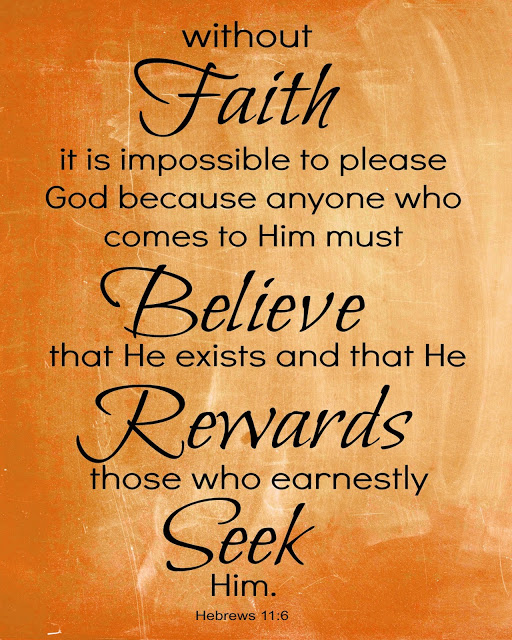
Hebrews 11:6. “And without faith, it is impossible to please, God, because anyone who comes to Him, must believe that He exists and that He rewards those who earnestly seek Him.”
James 1:2-7. “Considerate, pure joy, my brothers and sisters, whenever you face trials of many kinds, because you know that the testing of your faith produces perseverance. Let perseverance finish its work so that you may be mature and complete not lacking anything. If any of you lacks wisdom, you should ask God, who gives generously to all without finding fault, and it will be given to you. But when you ask, you must believe and not doubt, because the one who doubts is like a wave in the sea, blown and tossed by the wind.
Where doubt reigns, faith cannot abide. (Billy Graham) When we utter the ‘if only’s’ we are in essence doubting our maker, and faith cannot abide. When we doubt the ‘if only’s’ weaken our faith, in fact it renders it void. Our faith resides in the truth that Jesus is our Savior, who cares for us, directs us, and provides for us. Praise, and Thanksgiving should replace our ‘if only’s’.
Images: Hebrews 11:6, Highland Park Baptist Church; John 8:12, wiirocku.tumbler.com; Ephesians 5:8,9 Pinterest, Laura Huntington; @studentdevos
Scriptures: Jesus is the Light. Bible Verses About Jesus Christ, Light of the World. ccg.org; 10 Bible. Erases About Faith and Doubt. Jesus film.org; Biblegateway.org









 Lisa’s Daily Inspirations