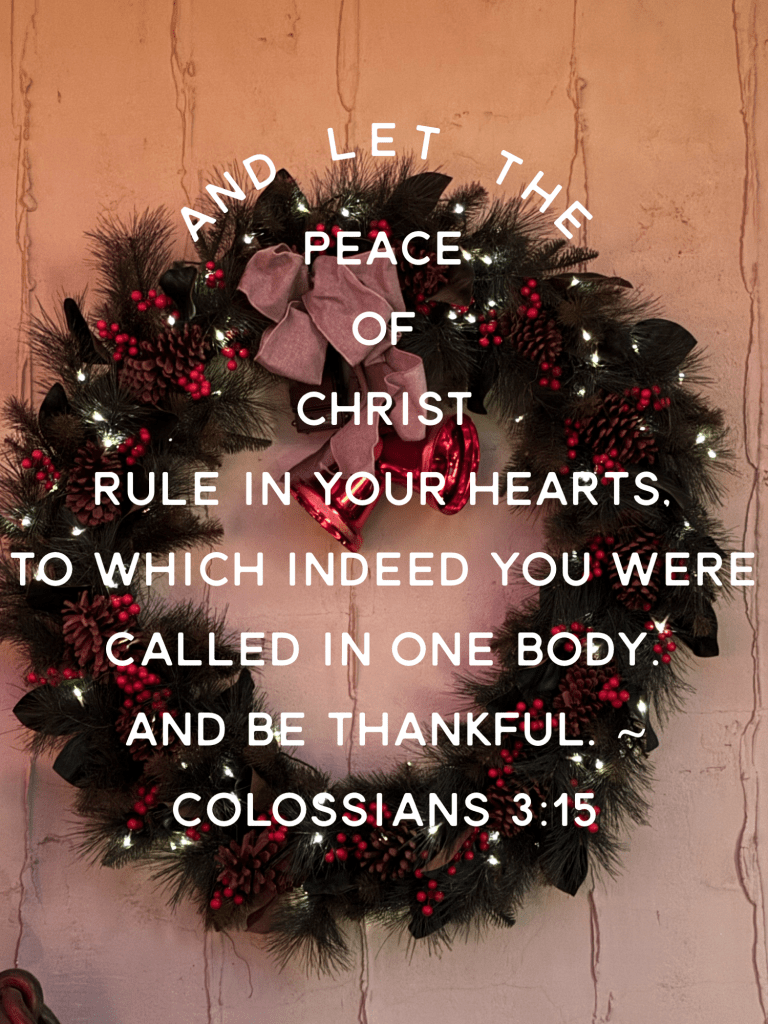
Focus on the PEACE Christ provides and not the chaos of the day. One empowers and the other steals your strength.
Stolen strength feeds evil. Evil seems to be emboldened days. If we all take back our strength and abide in the peace of Christ, following his laws, we can overcome the evil of the day. We are all part of one body, let us focus on the peace of Christ.
God’s quiet voice, often described as the still, small voice, is a profound and deeply personal aspect of spiritual connection. It is the gentle and loving guidance that emanates from the divine, a subtle yet influential force that can shape the course of one’s life. This quiet voice has been depicted throughout history and across various religious and spiritual traditions as the tender whisper that stirs the soul, leading individuals towards acts of kindness, moments of insight, and decisions that align with their highest good. Whether it is recognized as the voice of conscience, the gentle tug of intuition, or the peaceful reassurance that comes during times of uncertainty, the quiet voice of God has the power to bring about profound transformation and a sense of inner peace. It is a reminder that divine presence and guidance can be found in the quietest of moments, in the subtlest of nudges, and in the whispers of the heart. Tuning into this gentle guidance enriches the spiritual journey, fosters a deeper connection with the divine, and offers a sense of purpose and fulfillment that comes from aligning one’s life with the wisdom and love of the divine.
Summary:
God’s quiet voice is a gentle, subtle presence that speaks to our hearts and souls. It’s a soft whisper of wisdom, guidance, and direction that can be easily overlooked if we’re not paying attention. This quiet voice guides us toward a life of purpose, meaning, and fulfillment through intuition, conscience, and inner conviction.
Our morning devotional is written to lighten your concerns, anxiety, and fears.
The Amplified Version of Aaron’s Benediction reads:
“¶The Lord bless you, and keep you [protect you, sustain you, and guard you]; ¶The Lord make His face shine upon you [with favor], And be gracious to you [surrounding you with lovingkindness]; ¶The Lord lift up His countenance (face) upon you [with divine approval], And give you peace [a tranquil heart and life].’”
Numbers 6:24-26 AMP
As long as we belong to God, our Father, we can survive any challenges that lie before us. We reside in His refuge, and He gives us peace in whatever storm tries to overwhelm us.
He protects us, sustains us, and gives us new mercies every morning. He gives us divine approval and peace greater than any peace we can expect or imagine.
This is the day the Lord has made, let us rejoice in our hearts and not be dismayed by the trappings of this world. Though chaos surrounds us, it cannot influence who we are in Christ.
Many new and more mature believers grapple with the hesitancy to step into discipleship. A common theme I have encountered throughout my years in BSF is, “I want to be one of Christ’s disciples, but I fear approaching others to share the Good News.”
God commanded all believers to share His Word, change our character to reflect the character of Christ, and show His love for us through our demonstration of loving others. The thought of loving others as Jesus loved us is a risk. It is the risk of being rejected. Hesitancy stems from not knowing how to approach others with agape love, especially those you do not know. Some fear being intimidated and running the risk of being ridiculed. What is happening is that you are caught in a viselike grip known as a stronghold. Your thoughts, or as we will learn later, your self-talk, reflect strongholds stymying your faith. Paul wrote in 2 Corinthians 10:3-5, “Though we live in the world, we do not wage war as the world does. The weapons we fight with are not the weapons of the world. On the contrary, they have the divine power to demolish strongholds. We demolish arguments and every pretension that sets itself up against the knowledge of God, and we take captive every thought to make it obedient to Christ.”
God calls all believers to share His Word, transform our character to reflect the character of Christ, and demonstrate His love through acts of kindness toward others. The idea of loving others as Jesus loved us involves an inherent risk, such as the possibility of rejection or the fear of being intimidated or ridiculed. This hesitancy often arises from not knowing how to approach others with agape love, particularly those we do not know. Our thoughts, or as we will discuss later, our self-talk (internal conversations with ourselves), reflect strongholds that stymy your faith. Consequently, we may find ourselves trapped in a stronghold—a spiritual war. According to Biblehub.com, “a stronghold represents arguments and pretensions that set themselves up against the knowledge of God.” The Apostle Paul addresses this in 2 Corinthians 10:3-5: “Though we live in the world, we do not wage war as the world does. The weapons we fight with are not the weapons of the world. On the contrary, they have divine power to demolish strongholds. We demolish arguments and every pretension that sets itself up against the knowledge of God, and we take captive every thought to make it obedient to Christ.”
Why do we perceive sharing the Word as risky when the Holy Spirit dwells in us? God’s Word is embedded within us. Paul reminds us that the Word serves as our weapon to demolish these strongholds, particularly the fear and hesitancy that come with sharing God’s message. Peter encourages us to stand firm in our faith and resist the devil, which includes combating negative self-talk that tells us we are ill-equipped to share His Word. This negative self-talk reinforces our doubts about our ability to be effective disciples. The good news is that we can reverse this pattern of negative thinking and doubt. Zechariah 4:6 reveals that the Lord instructed him to tell Zerubbabel, and by extension, us, that His power and Spirit are the ultimate sources of success. It is not our strength that empowers us to share the Word. The Holy Spirit provides the right words to communicate effectively with those we speak to. Paul prays in 2 Thessalonians 3:5 “that the Lord direct our hearts into God’s love and Christ’s perseverance.” If we embrace God’s love and Christ’s perseverance, nothing can hold us back from sharing the Word.
Joshua 1:9 states: “Have I not commanded you to be strong and courageous? Do not be frightened, and do not be dismayed, for the Lord your God is with you wherever you go.” If God is with us wherever we go, He is with us when we share the Word. We should not be frightened or dismayed from spreading His Word.
To address our weaknesses and fears, we must examine three factors that hold us back: a lack of confidence, negative self-talk, and, most importantly, inconsistent faith.
Hebrews 10:35 advises us not to throw away our confidence. Verse 36 further stresses the importance of perseverance so that, when we have done God’s will, we will receive what He has promised. Our confidence is rooted in the Lord. Building this confidence is a gradual process that develops through both success and failure. Each failure teaches us what does not work, while each success reinforces what does. Over time, these experiences contribute to our overall confidence. Our confidence rests on our willingness to rely on God’s Word, surrender to His will, and feel comfortable depending on His strength. The more we practice sharing God’s Word, the more confident we become.
In Mark 13:1, we are promised we will be given the words to speak when needed. This passage illustrates divine guidance and inspiration for sharing God’s truth and boldly expressing our faith, even in challenging situations. Luke 12:12 affirms that the Holy Spirit will provide the words we need the instant we need them.
The key is to focus on small, manageable steps rather than becoming fixated on the end goal. Concentrate on God’s Word and seek out scriptures that resonate with your needs. As we develop skills and refine our methods, we build the confidence and strength necessary to share the Word beyond our immediate circle. For instance, initiating a casual conversation with fellow believers and sharing a personal experience can demonstrate how God has influenced, directed, or positioned you to share the Word with others. This approach also opens the door for additional conversations with people you interact with regularly.
As you build confidence in sharing the Word, you will feel emboldened to reach out to a broader audience—associates, friends who are not believers, and even strangers. It is a gradual process; each step brings you closer to feeling comfortable sharing the Word with anyone, including the person you meet on the street.
We are all equipped to become disciples; however, many of us are our own worst critics and fall victim to negative thoughts. Our internal critic is a disruptor, reinforcing long-held fears of inadequacy and failure. Yet, there is always light that dispels darkness (fear), and as you continue to share, you will find stories of victory. The hesitation to step into discipleship often stems from negative thought patterns, strongholds, and wavering faith. Remember, you are fully equipped to become a disciple. As a new creation in Christ, you have been gifted with His values and character. The only thing holding you back is you.
Conversation starters: One of the most challenging aspects of stepping outside your comfort zone is figuring out how to start a conversation. Opportunities arise in various situations throughout your life. The scenarios outlined below may assist you in your efforts to open new doors.
Sitting at a Doctor’s Office: You could say, “I am waiting to be called for my annual checkup. How about you?” If they are also waiting, you can add, “We are so fortunate that God has provided us with medical care; many who are less fortunate.” If they mention being there with a loved one or friend, you can ask, “Do you mind if I pray for them? What is their name? My name is ______. What is yours? It’s nice to meet you. Let’s pray.”
At a Coffee Shop: You could say, “I love coming here for my morning coffee and some quiet time. It’s a great place to reflect on God’s blessings. Do you have a favorite spot where you feel close to God?”
Waiting in Line: You could say, “Waiting can be a bit tedious, but it’s a good time to think about the patience that God teaches us. Have you ever felt God’s presence during a moment like this?”
During a Community Event: You could say, “It’s wonderful to see our community come together like this. It reminds me of the unity and love that Jesus taught us. Do you have any favorite Bible verses about community?”
At a Park: You could say, “Nature is such a beautiful testament to God’s creation. Do you ever feel a sense of closeness to God when surrounded by nature?”
At a Social Gathering: You could say, “Meeting new people and exchanging stories is such a joy! Have you noticed how God has been at work in their lives?”
To anyone, anywhere, at any time: “Have you ever had a moment where you felt God’s guidance in your life?”
Part Two
In his book, *The Confidence Gap*, author Russ Harris explains that people often focus on their goals before identifying what values are important to them. As Christians, our values should guide how we pursue our goals. The first step is to evaluate our identity in Christ. Consider the following questions: Do we reflect the characteristics of Christ? Which characteristics feel most comfortable to us? Why might some be more comfortable than others? Which characteristics do we need to strengthen to effectively disciple others? These reflections will help determine our approach to discipleship.
God has given each of us different gifts for discipling others. Some may feel comfortable speaking with people, while others might prefer volunteering services, leading a Bible study, sending letters, texts, or emails, or even writing a blog or devotional. Regardless of where your strengths and comfort lie, you are discipling others through your interactions and by sharing the Word.
Jesus trained His disciples by demonstrating His gifts and sending them out as apprentices. They did not acquire all their skills at once, and we won’t get everything right from the beginning either. The Bible teaches us that we must learn and strengthen our identity as new creations in Christ. Understanding our identity and the values that best represent Christ is an ongoing journey.
God does not leave anything to chance. Scripture reinforces our identity in Christ. 2 Corinthians 5:17 tells us, “If anyone is in Christ, he is a new creation. The old has passed away; behold, the new has come.” Ephesians 4:24 states, “…put on the new self, created after the likeness of God in true righteousness and holiness.” Finally, Ephesians 3:12 tells us we have boldness and access with confidence through our faith in Him.
We have all the gifts necessary to become effective disciples, which is part of our new identity. Our values and ethics serve as the standards we follow based on what is important in our lives. As Christians, our values align with the principles taught by Jesus. While our beliefs and values remain constant, the way we express them can evolve.
In Philippians 4:9, Paul reminds the disciples: “Whatever you have learned or received or heard from me, or seen in me—put it into practice, and the God of peace will be with you.” Once we identify our values, we can change the messages we internalize and communicate. For example, we can shift from thinking, “I am uncomfortable reaching out to share the Word,” to feeling, “I am comfortable sharing the Word of God with others.” Our communication style will depend on the specific situation or circumstance.
Overcoming Fear and Building Confidence
Building Confidence: Confidence is built over time through both failures and successes. Failure teaches you what does not work, while success affirms what does. Evaluating your values and characteristics in Christ can help build this confidence. Changing negative self-talk to positive affirmations is also crucial.
Small Steps to Big Goals: Focus on small, manageable steps rather than the daunting end goal of discipleship and reflecting on daily interactions and journaling the outcomes can help build confidence gradually. This approach enables you to feel comfortable sharing the Word with anyone, including strangers.
Practical Approach: Start with casual conversations and understand the person’s needs before diving into scripture sharing. This helps in making the conversation more effective and less intimidating.
Overcoming Negative Messaging: Identify and change the negative self-messaging that holds you back. Rewriting your internal message to positive affirmations can help you become comfortable with sharing the Word.
Focus on What Can Be Controlled: Concentrate on what you can control rather than the end goal. This helps in reducing self-doubt and discouragement.
Listening to Others’ Victories: Hearing others share their victories in discipleship can be encouraging and help you overcome your fears.
Part Three
Summary
Once reborn through faith in Christ, we become new creations, transformed by His love and grace. The Holy Spirit, the third person of the Trinity, resides within us, guiding and instructing our thoughts and actions. This divine presence leads us along the right path and empowers us with strength during our moments of weakness, reminding us that we are never alone in our struggles.
The Holy Spirit plays a crucial role in helping us combat negative self-talk—those critical inner voices that can stifle our confidence and hinder our ability to share the Gospel effectively. By acknowledging our fears and doubts, we can work through them and gradually build the self-assurance necessary to bravely share the truth of our faith. Recognizing the barriers that hold us back is the first step; once we address these obstacles, we can begin to develop a stronger sense of purpose as disciples of Christ. 1Corinthians 6:17 beautifully encapsulates the depth of our relationship with God, stating, “Whoever is united with the Lord is one with Him in spirit.” This profound unity signifies that we are intimately connected to God, sharing in His love and wisdom. Furthermore, 1 Corinthians 15:57 triumphantly proclaims, “Thanks be to God! He gives us victory through our Lord Jesus Christ.” This verse is a powerful reminder that our victories in life are made possible through Christ’s sacrifice and resurrection.
To effectively combat negative self-talk when sharing the Word, consider implementing the following practical steps:
1. Practice Mindfulness: Take time to be aware of your thoughts. Recognize when negative self-talk arises and challenge those thoughts with truth from Scripture.
2. Affirmations: Create a list of positive affirmations based on biblical truths about your identity in Christ. Repeat them daily to reinforce a positive mindset.
3. Seek Community: Surround yourself with fellow believers who encourage and uplift you. Sharing experiences and insights can strengthen your resolve and confidence.
4. Pray for Guidance: Regularly seek the Holy Spirit’s help through prayer. Ask for clarity and courage to share your faith authentically.
5. Start Small: Begin by sharing your faith in low-pressure situations. Gradually expand your circle as you grow in confidence.
By implementing these steps, you can overcome negative self-talk and embrace your calling to share the Gospel with boldness and joy. Once reborn, we become new creations in Christ, and the Holy Spirit resides within us. The Holy Spirit instructs, guides, and directs us, providing strength in our moments of weakness. He helps us overcome negative self-talk that can hinder our ability to become true disciples. By recognizing what holds you back and actively working to overcome it, you will gain the confidence to share the Word and fully embrace your role as a disciple of Christ.
A year or two ago, I wrote a post about forgiveness and sin. I feel led to continue the conversation. Matthew 6:14, NLT shares “For if you forgive men their trespasses, your heavenly father will also forgive you. But if you do not forgive men their trespasses, neither will your father forgive your trespasses.”
God teaches us that forgiveness is a gift—one that continues to give. When someone forgives, they become the giver, and another person becomes the recipient. This recipient may then reflect on the gift they received and choose to pass on the gift of forgiveness to someone else. By forgiving, your heart softens, allowing you to open the door to receive God’s forgiveness.
If you do not forgive others, the Lord will not forgive you. How can He? Sin and forgiveness cannot coexist. To be forgiven, you must let go of the sin that is holding you captive. Many of us know someone who is imprisoned by hate, anger, and disdain for someone who has wronged them. Who is truly hurting in this situation: the person harboring hate or the recipient of that hate? God does not want us to be bound by hate; instead, He desires for us to release it through repentance and forgiveness of those who have wronged us. He wants to set you free through your forgiveness.
Unforgiveness is sinful and stems from a lack of faith. This lack of faith robs you of your joy. It is impossible to feel hate and joy simultaneously; they cannot coexist. On the other hand, forgiveness is liberating. It is an expression of love, not directed at the person you are forgiving, but offered to our Lord and Savior. In turn, He acknowledges this change in your heart.
When you create space by forgiving others, God fills that space with His forgiveness for your own sins. This divine love fills you with joy, and that joy has a powerful impact. It opens the door for your renewed self to take control of your life.
Charles Stanley summarized it this way, “Through the grace of Jesus Christ, you have the spiritual resources to forgive others. When you release someone of a debt he or she owes, you were no longer bound by the spirit of unforgiveness or bitterness. You are free to see that individual as Christ does, anger no longer has the power to rule your life and decisions.
Forgiveness does not mean that what the person did was right. It means that you have turned him or her over to God. You are no longer holding on to the unforgiveness, and you are free to live fully for Jesus Christ.” (Life Principles Bible, Second Edition. pg. 1492)
The Misery of Sin, by Pastor Greg Laurie, Daily Devotional, April 22, 2022. Harvest Church.
“Restore to me the joy of your salvation, and make me willing to obey you.” Psalm 51:12
There’s a difference between sinning, knowing it, and being sorry for it and intentionally, habitually sinning again and again. If you’re a child of God, then you won’t habitually sin. You won’t be sinless, but you will sin less.
If you really have accepted God’s gift of salvation, then you will be unhappy and miserable when you’ve sinned. The Bible tells us in 1 John 3:9, “Those who have been born into God’s family do not make a practice of sinning, because God’s life is in them. So they can’t keep on sinning, because they are children of God” (NLT).
This verse doesn’t say that if you’re a child of God, you won’t sin because everyone sins all the time. But if you’re a child of God, then you won’t be happy after you sin, you’ll feel convicted and you’ll want to get right with God.
There are sins of commission and sins of omission. A sin of commission is when you do what you should not do, while a sin of omission is not doing what you should do. The Bible says, “If we say that we have no sin, we deceive ourselves, and the truth is not in us” (1 John 1:8 NKJV).
If you want to be unhappy, then have unconfessed sin in your life. Happiness does not come from sinning. Misery, guilt, and repercussions come from sinning. That is why the Bible says, “Oh, what joy for those whose disobedience is forgiven, whose sin is put out of sight!” (Psalm 32:1 NLT).
After David sinned against the Lord, he wrote, “Restore to me the joy of your salvation, and make me willing to obey you” (Psalm 51:12 NLT).
Jesus said, “Apart from me you can do nothing” (John 15:5 NLT). It isn’t hard to be a Christian—it’s impossible . . . without the help and power of the Holy Spirit.
Forgiveness is a difficult undertaking, however, if you trust in the Lord the difficulty will melt away. 
Heart. My recent post, Obedience vs. Rebellion: Learning from Abraham and Saul – Bible Reflection, examines the difference between obedience and rebellion. Our heart is at the center of this dichotomy.
Our heart determines whether we are going to stand fast and be obedient to the Lord or rebel by being swayed by things that entice our flesh. Both affect our walk and impact God’s design or purpose for our lives. Our spiritual development rests on how we respond to our actions, desires, and behaviors. While obedience and rebellion are at the center of this dichotomy, they are controlled by free will which our Lord instilled in us. Free Will shrouds the heart.
Jeremiah 17:9-10 NIV, the heart is deceitful above all things and beyond cure. Who can understand it? “I the Lord search the heart and examine the mind to reward each person according to their conduct, according to what their deeds deserve.”
God gifted us with free-will which is the ability to know the difference between good and evil, right and wrong and make choices between the two. Further, He gave us free-will because He seeks our companionship and wants us to voluntarily enter into a relationship with Him. If He designed us to be robots, not humans, He would have had to program our responses which is the antithesis of His intent. A loving relationship is not possible if God had complete control over our lives and demanded that we love Him. God created us and instilled free-will to give us the option and desire to choose Him because we love Him. His greatest desire has always been to have a loving relationship with us. Adam and Eve were created for this purpose. He longs for us to choose Him over our flesh.
In Psalm 51:10-12 (NRSV), Paul wrote about the challenges we confront each moment of our lives – the choice between God or our flesh. This internal thought process begins in our mind, but is directed by our heart.
Psalm 51:10-12 NIV, Create in me a pure heart, O God, and renew a steadfast spirit within me. Do not cast me from your presence or take your Holy Spirit from me. Restore to me the joy of your salvation and grant me a willing spirit, to sustain me.
When we give in to our own willful desires over God, we lose our joy, we begin to feel the suffocation that it brings. Our spirit weakens to the demands of self, and we falter. Our spirit is no longer willing to fight the good fight. Our heart begins to hurt. When we fail to stay alert, we do not recognize the numerous (threat alerts) warnings that our flesh is taking over. We begin to vacillate between the loving care of God and our earthly desires of the flesh. The vacillation often begins to outweigh our relationship with God as we justify seeking the desires of our flesh. Another way to look at this is, we live in a world of conflict between good and evil. In Galatians 5 we are told that we should use our freedom to walk in the Spirit and should not gratify the flesh.
Paul spelled out the desires of the flesh and explained they are obvious and yet still inviting. Sexual immortality, impurity, excessive indulgence in sensual pleasures, idolatry, witchcraft, hatred, discord, jealousy, fits of rage, anger, blind- ambition, envy, drunkenness, and arrogance are some of the desires.
On the other side of the dichotomy, we find the Fruit of the Spirit, those things of God that reflect the characteristics of Christ. The Fruit of the Spirit are joy, peace, temperance, kindness, goodness, faithfulness, gentleness, and self-control. Galatians 5:25 implores us to live by the Spirit that lives in us and to keep in step with the Spirit. We should not take on conceit, provoke others, envy our neighbors, or gravitate towards any fleshly behavior that separates us from God.
Hebrews 10:22 NIV, Let us draw near to God with a sincere heart and with the full assurance that faith brings having our hearts sprinkled to cleanse us from a guilty conscience and having our bodies washed with pure water.
Our heart is filled with good and evil traits that appear as behaviors. When we live by the Fruit of the Spirit we experience a state of obedience demonstrated through our actions towards others. When we focus on self and personal gain we experience rebellion which separates us from God. We are shackled when we are driven by blind ambition and rebellion. We project God’s love when we are driven by a giving, caring heart.
These things also determine our faith. Abraham lived in a constant state of faith. Whatever God commanded he followed. Saul on the other hand, lived a life of self-indulgence and did not obey God’s commands, choosing instead to comply to a portion of what God asked, never fully complying. Partial obedience is disobedience or rebellion. Most of us are more comfortable when we try to appease God and simultaneously satisfy ourselves. Satan is the author of justification, deceit, disobedience and rebellion.
Proverbs 4:23 NIV implores us to stay alert and Guard (y)our heart above all else, for it determines the course of (y)our life.
Guarding our heart is difficult, it is not pure. Free-will provides the soil to make choices to either serve God or self. Consequently, it is important to focus on our heart. What state is your heart in? When reflecting on your life experiences, do you find that you more heavily weigh in on the spirit side or gravitate towards the flesh? When are you the happiest or experience freedom? When do you experience God’s love? Through self-examination, you can measure the depth of your faith. Do you experience joy and live to serve and support others or do you seek personal gain contrived by Satan?
Our hearts play a key role in who we are. It determines how we will respond to God’s Word. A calm heart gives life to our bodies. As Christians, we should always look through the lens of Christ to refocus our decisions. Do you desire to live as a servant, like Christ, and help others to draw near to Him, or do you prefer to be governed by the flesh and focus more on your advancement regardless of cost? We should not allow our hearts to reside in a state of rebellion, but rather in a state of love and obedience, with love being the more important of the two. If we did not love God we would not desire to please Him through our obedience. If we do not love God we live in a state of chaos, disobedience and rebellion. Our love for God activates our obedience while denying the self destruction of rebellion.
James 4:7-8 NLT, So, humble yourselves before God. Resist the devil, and he will flee from you. Come close to God, and God will come close to you. Wash your hands, you sinners; purify your hearts, for your loyalty is divided between God and the world (flesh).
Hebrews 10:22 GWT, So let us come near God with pure hearts and a confidence that comes from having faith. Let us keep our hearts pure, our consciences free from evil, and our bodies washed with clean water.
AdditionalScriptures that highlight the importance of the heart:
Ezekiel 36:26 NIV, I will give you a new heart and put a new spirit in you; I will remove from you your heart of stone and give you a heart of flesh. (Heart of flesh is not referencing the evil behaviors identified in Galatians.)
Psalm 119:11 NIV, I have hidden your word in my heart that I might not sin against you.
Matthew 5:8 AMP, Blessed [anticipating God’s presence, spiritually mature] are the pure in heart [those with integrity, moral courage, and godly character], for they will see God.
Proverbs 3:5-6 NIV, Trust in the LORD with all your heart and lean not on your own understanding; in all your ways submit to him, and he will make your paths straight.
Psalm 73:26 NIV, My flesh and my heart may fail, but God is the strength of my heart and my portion forever.
John 14:27 NLT, I am leaving you with a gift—peace of mind and heart.
1 Samuel 16:7 NIV, But the LORD said to Samuel, “Do not consider his appearance or his height, for I have rejected him. The LORD does not look at the things people look at. People look at the outward appearance, but the LORD looks at the heart.”
Matthew 22:37 NIV, Jesus replied: “’Love the Lord your God with all your heart and with all your soul and with all your mind.’
Images: Google free images, LABphotos, Pixabay.com









 Lisa’s Daily Inspirations