Focus on Peace

Quote

LAB PHOTOS

Good morning, day or evening🌞

Focus on the PEACE Christ provides and not the chaos of the day. One empowers and the other steals your strength.

Stolen strength feeds evil. Evil seems to be emboldened days. If we all take back our strength and abide in the peace of Christ, following his laws, we can overcome the evil of the day. We are all part of one body, let us focus on the peace of Christ.

Finding Hope through Healing and Faith

Quote

A Short Story by Lisa Blair

Some people believe that God has stepped back from performing miracles. They suggest that the Age of Wonders concluded with the closing chapters of the Old Testament. Yet, many individuals have experienced His miraculous presence. This affirms that we continue to live in a New Testament era filled with His grace and intervention.

For the majority of us, life unfolds in a landscape often colored by illness and uncertainty. We seldom witness those breathtaking moments where a person, deeply entrenched in suffering, experiences swift and profound healing. Still, for those of us fortunate enough to have encountered personal healing, the experience is enlightening. Witnessing a loved one rise from the depths of despair also clarifies the fingerprints of divine miracles in hindsight. It is within the small, seemingly insignificant moments that we recognize the turning points in our narratives.

In times of distress, when health falters, medical professionals can only discern that something is amiss; the precise nature of the ailment remains elusive. They tirelessly search for answers, exploring the perplexing landscape of symptoms and the underlying causes. Then, through relentless research and rigorous inquiry, a diagnosis emerges like a beacon of hope, though the path to recovery still feels muddled and uncertain. The doctors, though armed with knowledge, grapple with the question of how to combat the illness itself: Which medications can alleviate the anguish? What treatments hold the promise of halting its progression, or even eradicating it?

Suddenly, a breakthrough occurs—a ray of clarity pierces the fog of uncertainty. Answers materialize, and treatment plans take shape, ushering in a renewed sense of direction. Some people without faith credit this transformation solely to scientific endeavor. However, I believe all creation, including the principles of science, manifests God’s will.

With the diagnosis in hand, a tangible course of action presents itself, fostering hope for positive outcomes. Each step forward is a silent testament to God’s handiwork. Whatever journey we traverse, God accompanies us. We awaken each morning—a miracle in its own right. As we navigate through illness, we are granted another day, even when it feels more like a burden than a blessing. Each round of medication and therapy eventually leads to a flicker of vitality. In these moments, fragments of our former selves break through the darkness of our trials.

Do we recognize these transformations as miracles or as the fruits of science? They result from scientific advancement. Yet, they are also infused with the miracle of divine grace that envelops our lives. When we take the time to express gratitude for these small miracles, we affirm that our Savior stands with us. We acknowledge this divine presence. As we give thanks for regaining our health, we realize we are never truly alone. This holds true regardless of the prognosis. Each day is a precious gift, inviting us to live fully, even midst the challenges we face.

We can open our hearts to the prospect of a grand miracle—the successful completion of a long-awaited operation, the elimination of daily medications, and the farewell to prolonged rehabilitation. We learn to persevere through the harshest trials, eventually arriving at a point where life feels vibrant and manageable once more.

Gratitude fills our souls for the time we have been granted. We cherish the renewal of our relationship with the Lord, who stood steadfast during our darkest moments of illness. With every breath, we embrace the present. We acknowledge the inevitable passage of time. We also recognize the certainty of death that awaits us all. Yet, instead of succumbing to despair, we revel in the beauty of each day lived fully. We know with confidence that even amid life’s fragility, tomorrow can bring the promise of renewed hope.

The emergence of renewed hope grants us the invaluable gift of introspection. During moments of self-reflection, we come to understand that healing manifests in various dimensions of our lives. We experience physical healing as our bodies recover and regain strength. We go through emotional healing as we learn to cope with our feelings and overcome past traumas. Most importantly, we experience spiritual healing as we reconnect with a deeper sense of purpose and fulfillment. These transformative experiences are the miraculous gifts of life. Far too many overlook these gifts. They are bestowed upon us by our loving Father in Heaven.

As we close out 2024, reflect on the miracles in your life. List them, and count your miracles, then praise God for His interventions in your life. Our miracles are endless.

Scriptures:

Romans 15:19:

“They were convinced by the power of miraculous signs and wonders and by the power of God’s Spirit”. 

Psalms 77:14:

“You are the God who performs miracles; you display your power among the peoples”

Mark 11:24:

Therefore I tell you, whatever you ask in prayer, believe that you have received it, and it will be yours.”

Romans 15:13:

 “May the God of hope fill you with all joy and peace as you trust in Him, so that you may overflow with hope by the power of the Holy Spirit.”

James 5:14-15

“The prayer offered in faith will make the sick person well” 

Psalms‬ ‭103‬:‭2‬-‭3‬:

“Praise the Lord, my soul, and forget not all his benefits— who forgives all your sins and heals all your diseases,”

Isaiah‬ ‭38‬:‭16‬:

“Lord, by such things people live; and my spirit finds life in them too. You restored me to health and let me live.”

God’s knowledge existed before the beginning of time. In Jeremiah 1:5, it is declared, “Before I formed you in your mother’s womb, I knew you.”

Additionally, in Ephesians 1:4, it states, “Even before He made the world, God loved us and chose us in Christ to be holy and without fault in His eyes.”

Hebrews 13:8 states, “Jesus Christ is the same yesterday, today, and forever.” He healed people in the past, He heals people now, and He will continue to heal people in the future.

God declares, “I know the plans I have for you.” God knows what we will go through. Some challenges work together to help you become a mature Christian who submits to His will. Teaching you how to surrender your Will to the Will of God.

Scriptures – Bible.com

Photo – LAB Photos


‭‭


‭‭

No Forgiveness Without Repentance

Quote

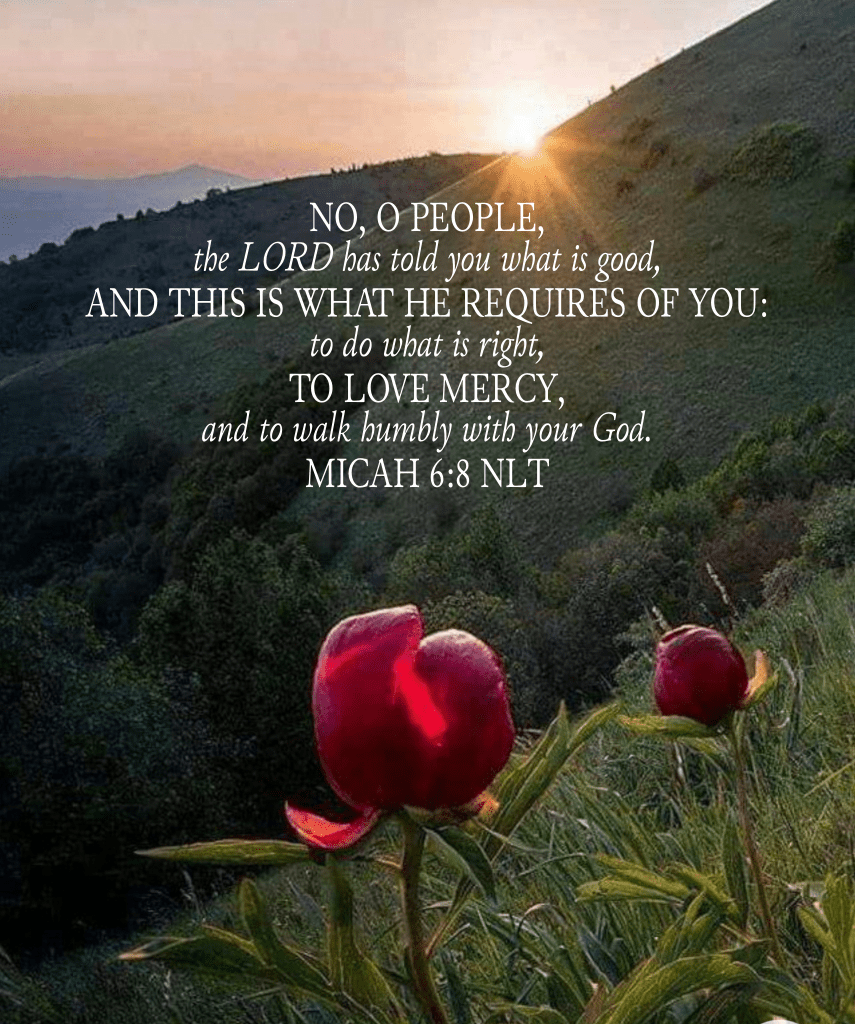
Micah 6:8 is a short verse, and is packed with instructions to become a better person. This post could be entitled, ‘How to become a better follower of Christ’, or ‘Improving our walk with Christ.’

“…there is no forgiveness without repentance, and that repentance is but a name, unless there be a ceasing to do evil, and learning to do well…” (Benson Commentary. Biblehub.com)

I have written many posts that focus on forgiveness. There is no end to the process. With each reading we learn more about forgiveness and repentance. They are tied to justice, compassion, kindness, mercy, humility, and sacrifice. These are traits Christ modeled during His walk on earth.

If we want to walk with Christ, it requires more than simply testifying that we forgive, we mush repent and as Benson wrote, cease to do evil. We must replace evil, e.g., being self-righteous, and self serving and become servants, and ambassadors of the Lord. This type of action does not determine salvation. We cannot acquire it to what we do, it is not by our work, salvation is a gift from God. HOWEVER, it is through our work, actions, and practices that we become closer to God because we must think on these things before we act, this links us to God’s instructions in a deliberate way.

We cannot expect justice until we act justly; we cannot expect compassion until we have compassion for others; we cannot expect kindness until we demonstrate kindness through our actions; we cannot expect a merciful society and world until we demonstrate mercy in our daily walk; we cannot expect the world to be a humble place until we demonstrate humility towards others; we cannot expect others to sacrifice until we work to strip ourselves of being self-righteous. Walking with Christ is more than trying to keep in step with His walk. He was sent to earth to model what it means to possess God in our hearts.

We are one people, culture and race create diversity, but does not negate oneness. We are all God’s children. A friend put it this way, Christ came to earth, modeled His purpose, was Crucified, said to the thief, ‘on this day you will be with me’. He did not take time to evaluate if the thief was worth saving, no, He takes us as we are, that is our salvation. The way in which we choose to live life demonstrates that receiving Christ is more that reciting scripture, it is acting the intentions set forth in scriptures in our daily walk. Our faith is demonstrated through our actions.

If our actions do not align with our faith, it is incumbent upon us to ask for forgiveness, repent, and cease doing evil. We are asking God to forgive us. This happens when we experience the need to repent from the heart, not the mind, meaning we truly experience the sorrow our actions we committed that are not aligned with God’s Word. This is Godly sorrow, heartfelt sorrow, not a sorrow we experience momentarily before we repeat the act we are seeking forgiveness for.

You can ask for forgiveness, but until we truly repent, the forgiveness is fleeting (because) there is no heart felt godly sorrow. Godly sorrow creates the process of change. It weakens and eliminates the evil we demonstrate in our walk, we continually become new creatures in Christ as we strip away our carnal behavior.

Resources: Bible hub.com; Photo – Vikas Nirmal, Twitter

Freed to Love (Post, Desiring God)

Quote

One of the most jarring sentences in the Bible goes like this: “If I give away all I have, and if I deliver my body to be burned, but have not love, I gain nothing” (1 Corinthians 13:3). It jars us because Jesus said, “Greater love has no man than this, that he lay down his life for his friends” (John 15:13); and he taught that one of the ways to love our enemies and do good to those who hate us and bless those who persecute us is to give freely of our possessions (Luke 6:27–30). But here Paul says you can give everything away and even lay down your life and yet not be acting in love. You can make the final sacrifice and be lost for ever.

A Biblical Critique on All Our Activism 

This means that right wing and left wing Christian political activity must be exposed to a radical biblical critique. On the right we are summoned to work for the rights of unborn humans, a strong defense, nuclear superiority, prayer in public schools, the support of Israel, family values, balanced budgets, etc. On the left we are summoned to work for a more just distribution of the world’s goods, nuclear disarmament, the end of interventionist politics in El Salvador and Nicaragua, ERA, programs to combat poverty and unemployment, etc. The Christian right and the Christian left are summoning us to action—and rightly so! If there is one thing Jesus cannot be accused of, it is indifference to the needs of people.

But there is a radical biblical critique which Christians on the right and Christians on the left must never forget: “If I give away all I have, and if I deliver my body to be burned, but have not love, I gain nothing.” Or to put it very bluntly: you can go to hell fighting for poverty programs and you can go to hell fighting for a prayer amendment, because love can never be defined simply as mere deeds; it always involves the condition of the heart of the doer. If we want to bring the message of the Bible to bear on the problems of the world around us, we need to realize that the Bible is much more radical than the agenda of either the right or the left. It says to both, “Though you give your body to be burned in the service of your agenda and have not love, you gain nothing.” Love can never be equated with anyone’s agenda because no agenda is love unless it comes from a certain kind of heart. We might be impressed with a person who gives a million dollars to build a hospital in Bangladesh, but God looks on the heart and queries the hidden motives of the soul. Christianity is not primarily an agenda for political activity; it is primarily a power that radically changes the human heart.

The Command to Love and the Nature of Faith 

Last week we saw in Galatians 5:6 that the heart which is acceptable to God is not one which depends on its works—whether right wing circumcision or left wing uncircumcision—but rather one which trusts so fully in God’s grace that the result is a life of love. Love is an essential part of the process of salvation. It is not optional whether you love one another. No one can say, “I am saved by faith regardless of whether I love people or not.” For the only faith which saves is “faith working through love” (Galatians 5:6). Saving faith always gives rise to love and love gives evidence of genuine faith.

Today’s text picks up the theme of love from 5:6 and presses it home with a command in verse 13: “Through love be servants of one another.” Someone may ask, “Why should Paul command us to love if love is an inevitable result of faith (5:6), indeed, a fruit of God’s Spirit (5:22)?” The answer is that even though God is sovereign over his people and it is his Spirit that produces the fruit of love, nevertheless, God’s means of doing his work includes human exhortation. There is no contradiction between saying God brings about love in our hearts and saying that one of the ways he does it is to remind us of love’s importance with commands. But the fact that Paul has waited five chapters before he commands us to do anything, but trust God, warns us not to take this command as a “work of law” to be performed in our own strength to win God’s favor. Paul’s attack on works of the law has not been an attack on commands but on the teaching that we should try to fulfill commands in our own strength to earn God’s blessing. Commands are good and should be seen as a summons to have the obedience which faith produces. The command to love in Galatians 5:13 is a command to have the kind of free and confident heart that by its very nature has to love.

And I have found in my own experience that the Holy Spirit uses scriptural commands and especially the theological arguments for those commands to change my heart. And that is my aim as we look at 5:13–15. I pray that God will apply his Word to your mind and heart in such a way that love comes much more naturally and freely than it has before.

The logic of Galatians 5:13–15 is simple. First, Paul restates the foundation of the Christian life: “You were called to freedom, brethren.” Then, based on that divine call, he gives a twofold command. Negatively: “Do not use your freedom as an opportunity for the flesh.” Positively: “Through love be servants of one another.” Then to support this twofold command he gives a positive and a negative incentive to love. Positively: “For the whole law is fulfilled in one word, ‘You shall love your neighbor as yourself.’” And negatively: “If you bite and devour one another take heed that you are not consumed by one another.” The main point of the text is, “through love be servants of one another.” If you do this, you fulfill the whole law; if you don’t, you destroy yourselves.

Loving Service and True Freedom 

Let’s focus first on the positive command in verse 13: “Through love be servants of one another.” Listen to what happens when you put this command together with the first part of the verse: “You were called to freedom . . . Through love serve one another.” You were called to freedom from servitude; now in love submit to servitude! Here’s the question we should ask: Why is love which serves the needs of others the only way Christian freedom can express itself? Why are the call to freedom and the call to love synonymous? When Paul says, “Don’t use your freedom as an opportunity for the flesh,” he means that if you try, you lose your freedom. As verse 1 says, you “submit again to a yoke of slavery.” The works of the flesh and the fruit of love are not two different optional ways to live in freedom. When you live according to the flesh, you are in slavery. But when you serve each other in love, you are in freedom. Why?

Because love is motivated by the joy of sharing our fullness, but the works of the flesh are motivated by the desire to fill our emptiness. The meaning of “flesh” in the book of Galatians is not the physical part of man, but man’s ego which feels a deep emptiness and uses the means within its own power to fill that emptiness. If it is religious, it may use law; if it is irreligious, it may use booze. But one thing is sure: the flesh is not free. It is enslaved to one futile desire after another in its effort to fill an emptiness which only Christ can fill. So when Paul says in verse 13, “Don’t use your freedom as an opportunity for the flesh,” he means, don’t surrender the freedom that you have in the all-satisfying Christ to return to the unsatisfying desires for mere physical pleasures or self-exaltation.

So works of the flesh are motivated by a desire to fill our emptiness. But love is very different—it is motivated by the joy of sharing out fullness. “Love does not seek its own” (1 Corinthians 13:5). When we love, we are not enslaved to use things or people to fill our emptiness. Love is the overflow of our fullness. Therefore, love is the only behavior that we can do in freedom. When God frees us from guilt and fear and greed and fills us with his all-satisfying presence, the only motive left is the joy of sharing our fullness. When God fills the emptiness of our heart with forgiveness and help and guidance and hope, he frees us from the bondage to accumulate things and manipulate people. People who devote large hunks of their life to surrounding themselves with the comforts of this world testify that God has not filled the void of their heart to overflowing. When God is our portion and we are truly free, then we will serve one another through love. Freedom flows forth in love just as surely as a bubbling spring flows forth in a mountain stream. But the flesh is like a vacuum cleaner: it sucks and sucks and just the moment it starts to feel full, somebody throws the bag in the garbage. The book of Galatians is written to show us how to become a mountain spring that serves the valley with the water of love.

Love Your Neighbor as Yourself 

There is no more fulfilling way to live than to draw daily on God’s all-satisfying grace and let it flow through us to meet the needs of others. Verses 14 and 15 give us a positive and a negative incentive to live like this. First, verse 14: Live like this, “for the whole law is fulfilled in one word, ‘You shall love your neighbor as yourself.’” In spite of all the negative things that Paul has said about “works of the law,” it is not a matter of indifference whether Christians fulfill the law in their behavior. The good news is that love, which is an overflow of God’s grace, is what fulfills the law. All God was after in the law was people who are so satisfied by his grace that their lives are a spill-spout of love.

There is a lot of confusion today about the self-love referred to in this verse: “Love your neighbor as yourself.” The most common error is to assume that this is a command to love yourself and that self-love means self-esteem. Both of these assumptions are wrong. Paul and Moses (Leviticus 19:18) and Jesus (Luke 10:27assume that all people love themselves; they don’t command it: “You shall love your neighbor as you (already) love yourself.” And the self-love they assume is not self-esteem but self-interest: all people want to be happy, even if they often don’t know what will really make them happy. We can know this is how Paul understands this verse because of how he applies it in Ephesians 5:2829. “Husbands should love their wives as their own bodies. He who loves his wife loves himself. For no man ever hates his own flesh, but nourishes and cherishes it, as Christ does the church.” In other words, self-love means the strong interest you have in your own health and safety and happiness.

“Love your neighbor as yourself” is not a command to love yourself. It is a command to take your natural, already existing love of self and make it the measuring rod of your love for others. There is not a harder command in the Bible than this one. It means: Want to feed the hungry as much as you want to feed yourself when you get hungry. It means: Want to find your neighbor a job as much as you are glad you have a job. Want to help your fellow student get A’s as much as you want to get A’s. Want to help the person stalled on the freeway as much as you are glad you are not stalled on the freeway. Want to give the poor softball player a chance to play as much as you want to play the whole game. Want to share Christ with your neighbor as much as you are glad you know Christ yourself. 

Use all the creativity and energy and perseverance to do good things for others that you use in doing good things for yourself. Care about what happens to others as much as you care about what happens to yourself. Can you imagine what the church would be like if we were all like that: looking at the person to the right and to the left and feeling the same longing for their happiness that we feel for our own. Not only would the law be fulfilled, this place would be iridescent with joy, and the glory of God would be unmistakably present in our midst. And people would be converted! Let’s be like that in the power of the Holy Spirit.

The Tragic Alternative to Love 

For if we don’t, verse 15 gives the tragic alternative: “If you bite and devour one another take heed that you are not consumed by one another.” A church of people who do not serve each other in love will destroy itself. God has been good to Bethlehem to pour out a spirit of love upon this people for 112 years. And my prayer is that we abound more and more in love for one another and for all men (1 Thessalonians 3:12).

And remember, we can only love if we are free. That is, love is motivated by the joy of sharing our fullness, not by the desire to fill our emptiness. Is it a coincidence that verse 15 describes what wild animals do when they are starving, not when they are filled (empty instead of content)? “If you bite and devour one another take heed that you are not consumed by one another.” When you are not filled with God, it is sweet to eat your enemy.

But, brothers and sisters, God has called us to the freedom of fullness which overflows in love, not to the slavery of emptiness which bites and devours and is never satisfied. In Jesus Christ, God offers us forgiveness, daily help and guidance, and hope for the greatest future imaginable. And it is all free, purchased by the death of Jesus, received by faith alone. The secret of love is freedom, and the secret of freedom is utter confidence in the love of God.

Which gives us the clue (returning to our starting point) why a person can give away all his goods and deliver his body to be burned and yet not have love. Such a person may not be acting in freedom. He may not be motivated by the joy of sharing a God-given fullness, but only by a deep longing to fill his emptiness. In that case, he is not acting in love and God is not honored as the all-satisfying source of fulfillment.

John Piper (@JohnPiper) is founder and teacher of desiringGod.org and chancellor of Bethlehem College & Seminary. For 33 years, he served as pastor of Bethlehem Baptist Church, Minneapolis, Minnesota. He is author of more than 50 books, including Desiring God: Meditations of a Christian Hedonist and most recently Coronavirus and Christ.

Washing Feet Is More Than A Foot Washing

Quote

Washing others feet is an act of intentionality. Why did Christ wash others feet? He did so to teach us humility.

~ Lisa Blair
3DD0B91D-4B67-48F0-9CF5-A2013D070D9A

The story about Christ washing feet is a parable. Washing feet is metaphoric. Christ was demonstrating how to humble ourselves in service to others. This story illustrates a spiritual lesson – we should always behave in a spirit of humility, loving others, and becoming like Christ.

There was a time when I thought serving others was bending low. [I was self-righteous before I was born again.] I learned that Christ was not literally asking us to wash feet [though we can, and some ministries do], He was referencing our behavior towards others. We are to treat everyone like Christ treats us, friend and foe. We are to operate out of love, not carnal self-indignation which is a sin. It is not our place to condemn others. It is our place to love them and acknowledge that God judges, not us. So many of us, including me, jump to judgment, especially during these times, and want to wish our leaders and others into the cornfield. There is an old adage, ‘hate the behavior, not the person’. I believe that this is a lesson many are struggling with today. It is easy to condemn, though Christ did not condemn us because of our sins. He died on the cross for us because He loves us. We must practice caution to walk with Christ. This means we must deliberately change our carnal habits to live our lives employing the Fruit of the Spirit, our suite of traits to love others, to be at peace, to be patient and tolerant, to be kind, to exude goodness, to be gentle, to be faithful, and maintain self-control. We must learn to maintain the stance of being humble in all things, to attain inward purity.  It is not the action that is important, it is the intent of our action that is important. Our actions will not deliver us to heaven.

Salvation is not a reward for the good things we have done, so none of us can boast about it. Ephesians 2:9 NLT

Resources – Biblestudytools.com/John-Gill; Studylight.org/John-Wesley, John-Calvin

Image – YouVersion. Bible.com/Roger Cole

Scripture – Biblegateway.com

Is It Enough?

Quote

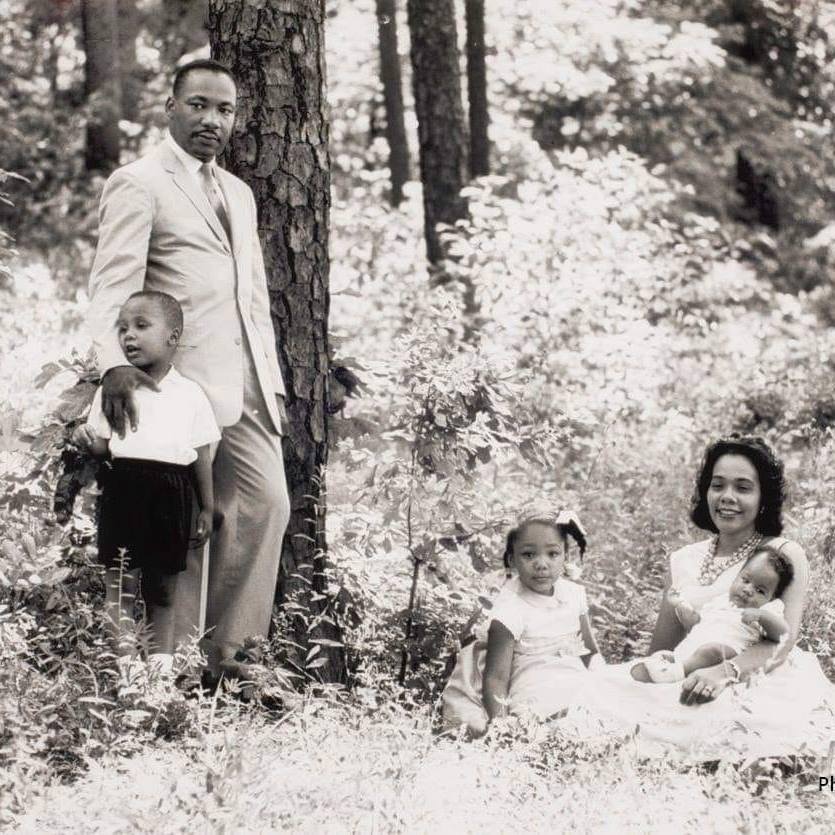
Today is Dr. Martin Luther King Jr’s. Birthday. We are honoring him for His work as one of the most prominent Civil Rights leaders throughout time. As a minister, he lived the Word. Being human Dr. King, had faults like the rest of us and questioned his effectiveness in spreading the Word and effecting change. Like most of us, he probably queried why God chose Him to do such a monumental work. God select’s people to do His work, we do not choose our path. Some of us do very public work to effect change, others of us live our daily lives living the Word in less conspicuous ways.

We all impact the world in different ways. During my earlier years, I led organizations that focused on diversity, racism, civil rights, and education. I am certain my work made a difference in ways that I cannot even phantom, but my thought today is – was it enough?

Jesus walked the earth and did not question if His work was enough. He laid the foundation for our salvation. His disciples probably questioned their work and wondered, is it enough? The truth is that we are human and will always question whether our work is sufficient.

God instructed us to carry forward in Jesus Name; to carry our cross; to do our best to exude Christ-like behaviors and not only speak about the Good News but to demonstrate it in our daily lives. That is all He asks. Therefore it is enough.

“Go therefore and make disciples of all nations, baptizing them in the name of the Father, and of the Son, and the Holy Spirit, teaching them to observe all things that I have commanded you to do.” Matthew 28:19-20, NKJV

I believe, it is enough if we are walking the path God paved for us before we were born into this world. We should never fall prey to the evil one’s effort to dilute our effectiveness. We should not doubt our effectiveness if we know we are on the path. If you are uncertain, take time to evaluate what you have done, and ask God to show you your walk. He may not show you everything but will often connect the dots. He may bring memories forward about certain events, places, and people you have been connected to during different phases of your life and how you impacted their lives. Like water that cascades outward when you throw a rock into a pond or ocean, you may never know how many people, places and things were affected by your due diligence to spread the Word.

We are therefore Christ’s ambassadors, as though God were making his appeal through us. We implore you on Christ’s behalf: Be reconciled to God.” 2 Corinthians 5:20, ESV

Watch – Serving Others Video by Rev. Dr. Bernice King

Images – Google.com
Scriptures – Bible.com
Video – YouTube

I am holding to the task of Resolving and Acting on the resolve to become a stronger Christian in the face of everyday life in 2019. Join me. Each step we take should bring us closer to Christ.

Thank you for reading my Posts. God Bless.