The Term Fear Is Contextualized

Quote

Worldly terms do not always express the same meaning when used biblically. Fear is one such term.

~Lisa Blair
216C1F2A-A7E1-427F-BD24-D00ECD6AD40E

When we were young, we were taught to fear the things that could harm us. Children’s stories were often set around monsters in the night, alien attacks, and sea creatures. Our parents and teachers taught us strangers were to be feared to ensure we were not kidnapped or harmed. Our nation’s leaders spoke of international enemies, I grew up in the Cold War when our leader’s told us our enemies were hell-bent on destroying our nation, and so we feared them too. Nationalists around the world are identifying people to fear, fear the Blacks, the Jews, fear Muslims, Mexicans, South Americans, and anyone that is not White. Our understanding and the context of the word fear created feelings triggered by the perception of danger, real or imagined (Mayo Clinic). Psychology Today reports that ‘fear is a vital response to physical and emotional danger, it has strong roots in human evolution. If people didn’t feel fear, they couldn’t protect themselves from legitimate threats.’ In an article entitled, Very Well Mind, fear is identified as a primal human emotion, that has physiological and emotional responses. So, as a child, I connotated fear with something unpleasant and unwelcome, causing emotional pain,  something to run from, not to.

The word ’fear’ can be a misleading word. I know that this word created a sense of discomfort for me. I recall thinking why should I be afraid of a loving God? It did not make sense. Our God is a good, a loving and protective God. We can call upon in good times and bad. He calms us in times of trepidation. He is our Father. As I grew older and matured as a Christian, and studied biblical dictionaries and read commentaries, I discovered that the word was not misleading but was a contextual term. It’s definition differed depending upon whether we seek clarity through the worlds dictionaries or biblical dictionaries.

I, like many of you, attended Sunday School, and when the teachers’ shared, we should fear the Lord, I misunderstood and took the word to mean the type of fear we learned about every day, worldly fear which equated to danger. As children would say, scary fear. I’ve since learned that worldly fear was designed to separate us from God. How can we love a God that we were told to fear and mistrust? The truth is, we were born into a spiritual war. Our parents thought that by warning us and intensifying our fear, they were keeping us safe as we grew up in a world of uncertainty. Satan created this dynamic to separate us from God. I fell prey on many levels early in life not seeing God as a loving Father and disavowing Him because He was intent upon destroying us (as seen in the Old Testament stories), and then as a parent failing to teach my children the distinction between worldly fear and Godly fear.

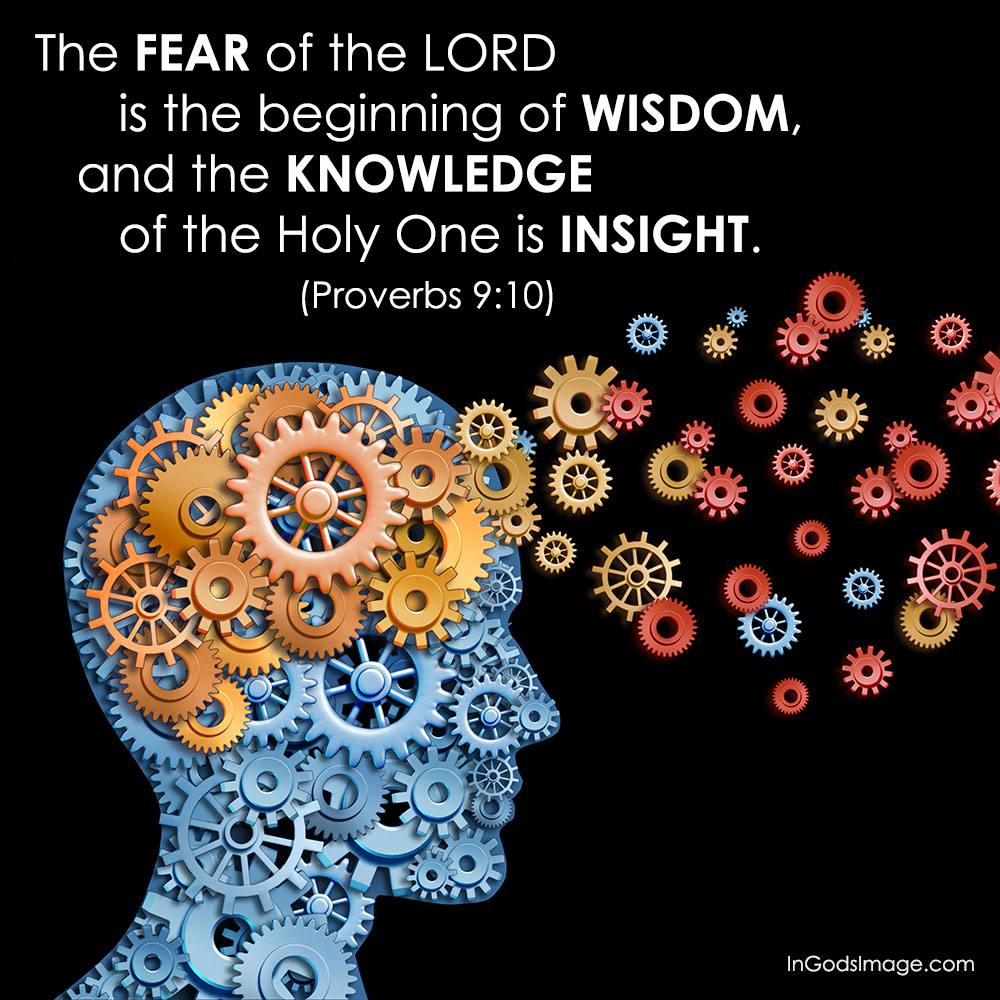
Now that we know what worldly fear means, let’s look at Godly fear. The fear of the Lord is defined as respect, awe, and submission. Godly fear becomes reverential in nature. I believe that this type of fear does not live in our consciousness until we receive Christ as our Lord and Savior. It is not until we break through the veil that separates the natural world from the spiritual world that we can understand the word, fear, has two meanings. Our awareness manifests when we become a member of God’s family and begin to realize the magnitude of His being. As we become aware, our hearts and soul begin to reap wisdom. Wisdom is the foundational base on which we build our relationship with the Lord. There is one caveat, if you do not accept Christ as your Lord and Savior, then there is no salvation, no relationship, and hence worldly fear will cause you to remain afraid of the Lord. You will see him as a tyrant who, as in the Old Testament, smites those who disobey Him. I believe Solomon wrote in Proverbs, 4:7 NKJV,

Gill (BibleHub.com) explains ‘getting wisdom’ as gaining a greater degree of knowledge of Christ.

Eugene H. Merrill (BibleStudyTools.com) explained it like this: Fear of God also lies at the heart of successful living in the world. Wisdom literature makes it clear that the fear of the Lord is the beginning of wisdom, a fear equated with the “knowledge of the Holy One” ( Prov 9: 10; 1: 7; Psalm 111:10 ). To fear God is to know him and to know him is to fear him. Such healthy fear enables one to praise God ( Psalm 22: 23; Rev 14:7 ); to enjoy benefits and blessings at his hand ( Psalm 34:9 ; Psalms 103:11 Psalms 103:13 Psalms 103:17 ); to rest in peace and security ( Psalm 112:7-8 ); and to experience length of days ( Prov 10:27 ; 19:23 ). But fear of God also produces fear of wrath and judgment in those who do not know him or who refuse to serve him. There are, thus, two sides of the fear of the Lord — that which produces awe, reverence, and obedience, and that which causes one to cower in dread and terror in anticipation of his displeasure.

As adults, it is our responsibility to teach those around us the context of words as defined in Biblical dictionaries. Imagine how different your life may have been had you been told the difference between the two languages, and how to establish your life on the foundational base of wisdom. This is not to say that we should have regrets, we live and we learn. However, this knowledge should speak to our hearts explaining how we can spread the Good News.

The word ’fear’ Can be a misleading word. I know that this word created a sense of discomfort for me. I recall thinking why should I be afraid of a loving God? It did not make sense. The following romped through my head: our God is a good God, a loving God. We can call upon in good times and bad. He calms us in times of trepidation. He is our Father. As I grew older and matured as a Christian, studied biblical dictionaries and read commentaries, I discovered that the word was not misleading but was a contextual term. Its definition differed depending upon whether we seek clarity through the worlds dictionaries or biblical dictionaries.

Biblical dictionaries define fear as respect, awe and submission. Fear precedes our awareness of the magnitude of His being. And, once aware, it brings reverence, knowledge, and wisdom.

Wisdom is the foundational base on which we build our relationship with the Lord.

Images – Google Images

The term Fear is ContextualizedReferences – Biblehub.com; Biblestudytools.com; Vine’s Expository Dictionary
Your Calling Is Holy

Quote

We were called before the universe was spoken into being. We were created by God and called to be His people. Our calling is a Holy Calling.

~ Lisa Blair

“who had saved us and called us with a holy calling, not according to our works, but according to His own purpose and grace which was given to us in Christ Jesus before time began,” II Timothy 1:9 NKJV

That is right, we have been called with a Holy calling, one that was made before the beginning of time. God envisioned this world and all in it before He created time before He created the universe. As children, many of us wrote stories about cosmos and its inhabitants, envisioning them to manifest our reality. We were enthralled by our own imaginations, but think, God created all that exists from His thoughts and being God, brought it in into being. Every minute detail manifested to become atoms, that became trees, land, water, nature, us. And, in doing so, He called us, giving us life and a desire to know Him better through His grace. To redeem us from the sin that destroyed Eden and His relationship with Adam and Eve who sinned against Him and stripped us, leaving us in a state of sin. We were called through His purpose to share that God sent His Son, Christ Jesus to save us from our sin nature and spread the Good News of our salvation. It is His gift of grace, not of our own doing.

GOD’S GIFT OF GRACE THROUGH THE DEATH OF HIS SON, CHRIST JESUS

Blessings

Quote

Family is our greatest blessing.

~ Lisa Blair

The LORD is my shepherd; I shall not want.”
‭‭Psalms‬ ‭23:1‬ ‭NKJV‬‬

God has blessed me with long life. I’m 67 today and counting. There is no better life in that I have a wonderful husband, three healthy sons, their spouses and significant others, and two Granddaughters. Working out at the gym right now, took a break to share, ‘our God is a good God’. Praise the Lord, I am grateful.

Deuteronomy 5:33Verse Concepts

“You shall walk in all the way which the LORD your God has commanded you, that you may live and that it may be well with you, and that you may prolong your days in the land which you will possess.

I know we all walk down the path into our destiny, the life God designed for us. We are not perfect but under construction; and for those of us with children have made mistakes while maturing as Christians. I’ve learned not to underestimate or doubt God’s purpose and GPS corrections. He welcomes all who seek Him. He is a God second chances and more. He knows our hearts.

Our children also walk with Him, make detours, but return to Him in due season.

Train up a child in the way he should go,
[a]And when he is old he will not depart from it. Proverbs 22:6 NKJV

Continue in the Lord, He is with you and covers you, and your children as they grow into adulthood and old age.

Godly Sorrow, Worldly Sorrow- Not the Same

Quote

Godly sorrow precedes Repentance.

~ LISA BLAIR
2Corinthians7:10-11_JasonJake_YouTube

For many years I felt the Lord was a punishing God. Words such as sorrow suggested that we were a hurt people. The truth is we are a hurt people, we are a sinful people who must come to a place where our sins are no longer acceptable as our guiding truth. Satan uses sin to capture and control us, to lead us to a hellish death. When we become remorseful and recognize the sorrow we have weighed down upon ourselves, and the God who loves and protects us, we enter into a state of Godly sorrow.

Godly Sorrow is only Mentioned Once in the Bible

Godly sorrow is only mentioned once in the Bible, in 2 Corinthians 7:10-11. Paul uses this term to explain to the Corinthians that they once lived a sinful life that would lead to worldly death, hell, upon departing this earth but had successfully turned away in earnestness to overcome their sin and repent.

Godly Sorrow is an Acute Sense of Sadness

Godly sorrow is an acute sense of sadness we experience when we sin. We feel sadness because we know we have committed sins. We know we have saddened the Lord, just as the Corinthians knew after Paul taught them that God is the Way and the Light. Palm chastised the Corinthians for their dissentions against the church. He intended to cause them to think and having accomplished this task caused them to repent. Paul knew they were remorseful and regretful for their actions of falling back into disbelief, but he also knew that neither would lead to salvation without true repentance and restitution. Godly sorrow brings repentance that leads to salvation.

Godly Sorrow is a Kind of Wretchedness

“Godly sorrow is a kind of wretchedness that can bring the repentant sinner to tears of grief. Godly sorrow results from a heartfelt conviction that we have offended God by our sin.” Our spirit grieves, and when Godly sorrow has its way, we resolve to stop repeating the sins, turn away from our carnal nature and pick up the cross and do good. We cleanse ourselves through prayer.

Results of Godly Sorrow

Doing good, is the result of Godly sorrow. It is through Godly sorrow that we can release the guilt and shame for our sin nature and actions, and repent asking for forgiveness and vowing to never return to them. Repentance is not an emotion, it is our decision to change. We have to make the decision to turn around and change our lives to truly repent. We repent and believe through faith. Faith comes after repenting and surrendering our life to the Lord. It is through God’s grace that we are forgiven and given new life to move forward. It is through God’s grace that we receive salvation.

God Sorrow, Repentance, and Salvation are Ours

Not all of 1 Corinthians 7 is intended for us. Some of it is intended for the Corinthians. However, repentance and salvation are for everyone who calls out to God to save them from their sins and believes that Christ died on the cross and rose from the dead to join God in heaven. God restored the discipline of the church of Corinth and sin, and He restores us. We sin through our (own) actions and complicitous approval of those sinning in our scope of influence. The church was complicit by not addressing incestuous behavior. We are complicit when we do not speak out against sin and do not address the offender.

Sorrow Cannot Merely Be Guilt through Discovery

“We must be very careful that our sorrow for sin is not merely sorrow that has been found out, but sorrow which, seeing the evil of the sinful thing is determined never to do it again and has dedicated the rest of its life to atone, by God’s grace, for what was done.” (Barclay)

Godly Sorrow, Apology and the Holy Spirit, Intercession on Our Behalf

When we pray, the Holy Spirit intercedes and helps us apologize to God and repent. This is accomplished through confessing our sins, not by denying them or defending them because neither is true confession.

Godly Sorrow is the Lining of Our Repentance

While Godly sorrow is only mentioned once in scripture, it is the lining of our repentance. Repentance separates godly sorrow from worldly sorrow. Godly sorrow produces true repentance. Worldly sorrow is not really sorrow, it is the only resentment that has been found out (William Barclay). If we do not feel Godly sorrow for our sinful actions, we are not able to truly repent and turn away from them with God’s help. Without godly sorrow, we would repeat the offense, given a chance to do it again. Godly sorrow not only hates the act, but it also hates the nature of the act itself. Without godly sorrow, we are bound by our sin nature and remain in the camp of the evil one.

God Separates Us From Our Sin Through Our Decision to Change

Knowing Jesus.com

Like the Church at Corinth, we are growing (maturing) when we repent and turn away from sin. God can separate us from our sins and place them as far away as the east is from the west, but He is only able to do so when we are cleansed and convicted to the point of wholehearted confession and repentance. It is through God’s grace that we are saved.

Images – YouVersion/Bible.com; Google Images-Knowing Jesus.com

References – What is Godly sorrow? Gotquestions.org; Studylight.org: 2 Corinthians 7:10-11, Commentaries – Charles Barclay, Albert Barnes, Coffman, John Gill; Nelson’s Quick Reference by Warren Wiersbe; Vine’s Complete Expository Dictionary by W.E. Vine; KJV Word Study; Youtube:2Corinthians_BrettVarner; 2 Corinthians_JasonJack

Crucified In Christ Brings Responsibly

Quote

Christ dwells in us. We are not our own. Living by the Fruit of the Spirit is a lifestyle conviction. 
~ LISA BLAIR

Christ lives in us through the Holy Spirit. The Holy Spirit dwells in us. He leads us and directs us if we are in tune with Him. Becoming in tune takes time. We must train ourselves to think differently. We must monitor our actions. We must know the Bible. We should make the effort everyday to please Him by radiating love. We should become familiar with the Fruit of the Spirit. It’s a journey that I’ve been on for some time, but recognizing that I am crucified with Christ means I must acquire the same traits as Christ. I had to learn to identify my actions and deeds (behavior) as part of the Fruit of the Spirit. While this practice begins to separate us from mistreating others, we are still sinners and have to be alert at all times. Our walk is a life long process, one that we agreed to when we received Christ as our Lord and Savior and invited the Holy Spirit to live in us.

The Fruit of the Spirit teaches us the behaviors we should use involuntarily in our day-to-day life as we grow in Christ. Learning the Fruit of the Spirit is important because 1) it frames who we are, and 2) it frames our walk in the eyes of others. The question is – are you familiar with the Fruit of the Spirit? Can you name them? What do they mean to you?

FRUIT

  • Love
  • Kindness 
  • Honestly 
  • Patience
  • Self-Control
  • Respect
  • Joy
  • Peace

Being crucified in Christ brings responsibility.

Salvation Is For All Who Want It

Quote

Romans 10:9,10 and Acts 16:31 share this common theme – believe in the Lord Jesus, and you will be saved.

~Lisa Blair

If you declare with your mouth, “Jesus is Lord,” and believe in your heart that God raised him from the dead, you will be saved. For it is with your heart that you believe and are justified, and it is with your mouth that you profess your faith and are saved…Everyone who calls on the name of the Lord will be saved…Consequently, faith comes from hearing the message, and the message is heard through the word about Christ.”
‭‭Romans‬ ‭10:9-10, 13, 17‬ ‭NIV

Acts 16:31 also explains how one receives Salvation through Jesus Christ. Acts 16:31 is clear, but perhaps the most difficult for non-believers to understand. Constant prayer forges it’s way into the hearts of loved ones who one day will sense God’s presence, and heart tug, and want to come to know Him and be saved. God is merciful and only He can invite us to receive Him as our Lord and Saviour. We are His tools, His workmanship displayed for the world to see.

Paul in Acts 16, ministered to prisoners and a prison guard, after the earthquake, sharing the Good News and encouraging them to receive Christ as their Lord and Savior. He shared that they could overcome this world if they professed with their mouth and believed in their heart that Jesus Christ rose from the dead and is the Son of God. He also shared that their family members could become believers and change their lives. The key is, they must individually profess. “Everyone who calls on the name of the Lord will be saved.” – Romans’ 10. Acts 16 includes family/household will also be saved.

“Believe on the Lord Jesus Christ, and you will be saved, you and your household.””
‭‭Acts‬ ‭16:31‬ ‭NKJV‬‬

This part is important because many read this scripture believing if they are saved, their family/household will be saved, however, the theologians interpret the scripture to mean that anyone who receives Christ is saved, and is the best security for the guards family from present danger, but they must make the decision and profess the truth of the scripture individually to be entitled to the same spiritual and everlasting blessings as the guard. (Benson), a family is not collectively saved by one persons witness. Jesus offers everyone salvation if they believe He is the Son of God.

The Amp version elaborates separating the scripture into two parts, the first focuses on the guard being saved, and the second focuses on his prospect of his household/family also being saved. The key – they must personally profess with their mouth and know in their heart that Christ died on the cross, rose and is the Son of God.

Believe in the Lord Jesus [as your personal Savior and entrust yourself to Him] and you will be saved, you and your household [if they also believe].” And they spoke the word of the Lord [concerning eternal salvation through faith in Christ] to him and to all who were in his house.”
‭‭ACTS‬ ‭16:31-32‬ ‭AMP‬‬

0CEAC20F-D616-4286-A0DB-836A585F8EE6

Romans 10:9,10 and Acts 16:31 share this common theme – believe in the Lord Jesus, and you will be saved.

Images – YouVersion.Bible.com/Roger Coles; Google Images

References: Thru the Bible with Dr. Vernon McGee. Q&A: Acts 16:31. Oneplace .com; Acts 16:31, Benson Commentary. Biblehub.com