Backstory: During one of my many nightly meditations, I found myself pondering, when do I sense peace in my life? My thoughts led to the following conclusions. Do any of them resonate with you?
Whenever you do any of the following and rest on God’s Word, not simply recite scripture but believe them as ‘truth’, you are at peace.
When you forgive, you are at peace.
When you give from your heart, you are at peace.
When you look at your day with no regrets of what could have been or what you lost, you are at peace.
When your prognosis is not what you wanted, and you give the condition to God, no holding back, you are at peace.
When you wake up in the morning and praise God for another day, you are at peace.
When you listen to the news and rebuke the chaos, relying on God instead of succumbing to evil, you are at peace.
I encourage you to ponder moments when you are at peace and share in the comment or reply sections.
PRAYERS ABOUT PEACE
Jeremiah 29:11 For I know the plans I have for you, declares the Lord, plans for welfare and not for evil, to give you a future and a hope.
Job 22:21 Agree with God and be at peace; thereby, good will come to you.
Jude 1:2 May mercy, peace, and love be multiplied to you.
Luke 2:14 “Glory to God in the highest, and on earth peace among those with whom he is pleased!”
Philippians 4:7 And the peace of God, which surpasses all understanding, will guard your hearts and your minds in Christ Jesus.
Philippians 4:9 What you have learned and received and heard and seen in me—practice these things, and the God of peace will be with you.
The Lord declared, “Peace I leave with you; my peace I give to you. Not as the world gives do I give to you. Let not your hearts be troubled, neither let them be afraid.” John 14:27
Receive God’s peace. Believe with your heart that the peace He gives is yours. It is both a promise and a gift.
Beautiful music, copy and paste in your search engine. Produced by AI Suno.com
Today is the last day of Advent and the first time I studied it day-by-day. O’ Come Emmanuel. There are seven Antiphons one for each day leading to Christmas Eve. Emmanuel means, God with Us. O come, O come, Emmanuel. What a wonderful thought.
From Lectio 365 App, Day 7
This final antiphon carries within it a delightful surprise: a secret message worthy of Sherlock Holmes.
To find it | must turn to the original Latin of these seven titles: Emmanuel, Rex, Oriens, Clavis, Radix, Adonai, Sapientia.
The first letters of these words form an acrostic that spells out the answer to the question posed by all the antiphons.
Again and again over the last week I’ve prayed, “O come, O come, Emmanuel” and now the Latin phrase spelled out in the acrostic is: Ero cras, which simply means, “Tomorrow I come!”
At last, after centuries of longing expressed in the ancient prophecies, God whispers:
“Tomorrow I come!” And it’s perfectly timed, because, of course, the code is only finally decipherable today, upon completion of the antiphons, which is the day before Christmas Eve.
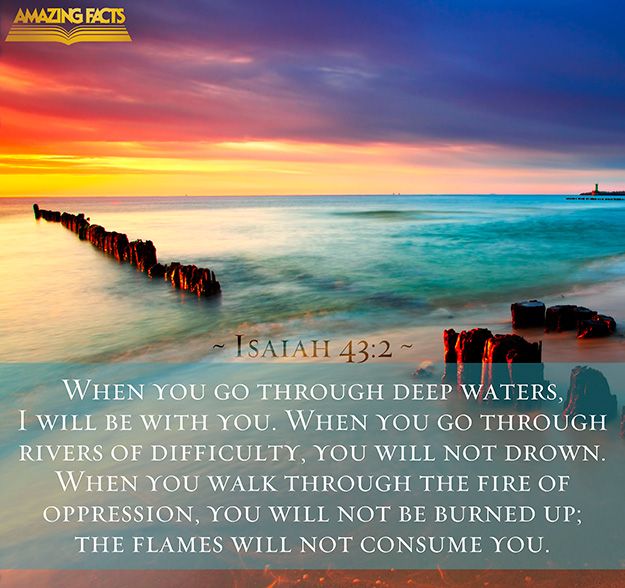
The Lord promises to be with us when we are broken-hearted. He may not remove the circumstances, there are lessons in all aspects of life, just as there are consequences to some of the circumstances we experience.
The upside is – we can rest in knowing He will help us navigate the path as we walk through it. He will remain close and show us a way through, a way of escape, and we will continue down the path of righteousness.
The Lord is with us in the best of times and the worst of times. He will never leave us or forsakes us. There is comfort in knowing He is always with you.
In Ephesians 3:17–19, Paul prays that the Ephesians will come to understand and experience God’s love. To truly understand and experience this love, you must accept Jesus as your Lord and Savior. You also need to receive the gift of the Holy Spirit.
Paul’s prayer was specifically for the Ephesians. (The Book of Ephesians is one of the sixty-six books of the Bible. The Bible is the living Word of God.) Paul was praying that the Ephesians understand and experience God’s love. His prayer extends to all living people today as well. If you are not a believer, are you being called to become a believer today? If you are a believer, are you in a fruitful relationship with the Holy Spirit? Do you think and function as if you are in control or do you submit to His influence?
Think about the nature of your relationship— are you fully invested in it? Are you content with the Holy Spirit simply residing in you, or do you desire something more?
Jesus promised you, and everyone throughout time, an advocate when He ascended to sit at the right hand of God. Luke the author of the Book of Acts teaches that the Holy Spirit is the advocate. He was sent to dwell in you the moment you become a believer. The Holy Spirit wants to influence your life. He desires more of you. Nonetheless, if you only accept Him as a resident, you are limiting His impact on your life.
As a believer, you entered a relationship that is instantaneously rooted and grounded in love. As humans, it is beyond our full understanding. In that moment, you realize you are filled with God’s fullness and that you belong to Him.
God, loves you unconditionally and dwells in you through the Holy Spirit. He desires for you to engage more deeply in your relationship with Him. He is a living partner. He serves as your advocate, guiding you on our journey. He speaks to the Father on your behalf. He redirects you, and He protects you from harm and so much more. In the Book of Acts, Luke encourages you to surrender to His influence.
As your advocate, He communicates with you, but how you respond is your choice. You can decide to listen to His messages or ignore them. When you surrender to His influence, you grant Him the authority to shape your behavior, character, and spiritual growth. When you let Him influence your life, the relationship deepens and grows more intimate spiritually.
Your greatest resource is the Holy Spirit. Your relationship with God is the most important one you will ever have. When you desire His influence, while keeping Him at a distance you have not fully surrendered to the Holy Spirit. You have not relinquished control over your life.
You are missing out on the fullness of God’s love. According to Charles Stanley, “We are filled with God’s Spirit the moment we accept Christ as our personal Savior. We are not repeatedly refilled, we have all we are going to receive of the Spirit at Salvation. As we grow in our Christian walk, we learn more about God’s ways, character, and presence within us through His Spirit. The more we know, love, and obey, the more we learn how to live a life to the fullest.” (Life Principles Bible, Second Edition. Thomas Nelson, 2011, page 1575)
In closing ask yourself, how can I move beyond selective listening to obeying His commands? What steps are necessary to fully submit to the influence of the Holy Spirit in my life? Am I willing to let go of the things that hold me back? Does my behavior prevent me from advancing to the next stage of my spiritual maturity? Is today the day I choose to surrender to the influence of the Holy Spirit?
Note: According to Charles Stanley’s Life Principles Bible, “the phrase ‘filled by the Holy Spirit’ was not used again, except for being mentioned in Ephesians 5:18. In that phrase, Paul talks about surrendering to the influence of the Spirit-not to the indwelling ministry of the Holy Spirit, which every believer receives.”
Photo, LAB Photos and AI Pixi; Scripture, bible.com
Humans are not steadfast. Our character ebbs and flows. Our sin nature does not allow us to be steadfast, we always falter, some more than others, until Jesus returns we are locked in the the fate of sin. The only constant in our life is that God’s character and standards never change.
This means the God who spoke in the Old Testament is speaking to us today. He spoke to His people through the disciples, prophets, and most importantly Jesus. The story always remains the same. Adam and Eve sinned and were thrown out of Eden. We entered eternal sin as the result of their disobedience. The Messiah will come and save us from eternal sin. Jesus will be crucified and return to heaven. He will return again to redeem His people, and we will live as one people in peace through eternity.
We all need stability. God’s character is our stabilizing force. Why? No matter what happens on earth, His plan is consistent, it does not waiver or deviate. The world today is not much different that the world of old. There are still false prophets and leaders who fail to surrender to the Will of God. Leaders still take bribes, or are rewarded by lobbyists. Many priests and religious leaders are bought by large contributions to their church, and fall pray to idols (money, fame, and fortune). Families still struggle to maintain the nucleus to hold the unit together. Economies and social justice are still at odds. And, the Word of God is still lost to many who only hear the noise of chaos.
This seems like desperate times, and in some respect it is. However, this world will operate in phases until the end. Our loving Father will love us, warn us of our wrong doing, judge us and restore us, each time hoping that we will turn back to Him.
The only thing we can rely on is His unfailing love and character that is ever-present, even when it seems He is not with us.
Our Lord never forsakes us or leaves us. He does not turn a blind eye to this world. He sees all, and remembers everything. He is always with us, holding us up when we cannot walk or take another breath. He provides for us when we cannot provide for ourselves.
He is here with us in the light and darkest moments. HE IS FAITHFUL throughout time. Rest assured, the sun will rise and set everyday as part of His creation and plan for our salvation. He is our loving Father who cannot fail. He is all truth and His character is unwavering.
When we are instructed to wait on the Lord in Isaiah 40:31, God is not instructing us to sit and twiddle our thumbs or coil, writhing in pain over what we should or should not do. The phrase ‘wait on the Lord’ means to wait in expectation, trust in Him, and put your hope in Him, not the circumstances you may be experiencing. If the farmers experience low crop yields, do they say, I will not plant seeds this year and I know God will supply a prosperous crop. No, they plant their seeds, care for the crop and pray that it will be bountiful. If we need a job, should we sit paralyzed or should we search for work and pray that God will direct us to the perfect position and give us favor in the employers eyes.
I am certain many may have experienced God’s work when seeking employment and the opportunities seem to be in conflict with their skills and education, yet that particular type of work seems to be calling. Quite often, God is sending you to a place where He needs you to be His messenger, or it may be a place that requires you to turn to Him and place all confidence in Him (a lesson, not a punishment). Is it easier to follow His direction in this instance, or to remain spirituality paralyzed? I submit, God controls everything, to assume He cannot direct your path is offensive. He created all in the world and universe, His architecture for our lives was completed long ago. He knew and knows all that we will go through in life, the good and the bad, as well as times of comfort and extreme discomfort, therefore He knows His expectations of how we are to approach Him; it is an act of defiance when we fail to reach out to Him. He expects us to firstly ask Him for direction(pray), then listen for His answer (seek), and thirdly act (respond).
God is our only avenue for deliverance. Consider your options and listen to the directions God shares with you. It may be as you hoped, and then again it may be something completely out of your purview. For many, attempting to make a decision creates paralysis and indecision; taking the path less traveled may also cause (temporary) paralysis. But, consider this, if we operate outside of God’s Will or chose our own path, we are not honoring God. God gives us strength when we seek Him. He directs us when we abide in His Word. His hope energizes us when we seek Him. When we wait upon Him, trusting He will answer and provide direction, we begin to exhibit strength, a peace of mind, and deliverance from the storm that rages and attempts to sink us, and consequently seeks to weaken and destroy our relationship with the Lord. Psalms 25:5 advises us to ask God to lead us in His truth and teaches us to learn to wait on His reply. Only God is our salvation. Psalms 27:14 implores us to wait on the Lord; to be strong and let your heart take courage as you yield to His direction. We are, according to Webster’s Dictionary, (commentary on Wait on the Lord, word search ‘wait’) stay or rest in expectation until the arrival of His answer is clear. We can rest in the knowledge that His provision will be better than anything we force.
Waiting on the Lord is active, not passive. It is preparing us to act when it becomes clear that He is directing our path. It urges us not to be indecisive and writhing in paralysis. Psalms 37:7 (ESV) shares “Be still in the presence of the Lord, and wait patiently for Him to act.” Rest in God’s love, be active and wait on the Lord. “Be joyful in hope, patient in affliction, and faithful in prayer.” Roman’s 12:2 (NIV) Continue to plant your crop, as in the case of farming, send out your resume, share with others your need for employment, seek out communities of those also searching for employment and ask God to show you direction, ask for a sign that you are on the correct path even when His path may mean a lower salary that you are accustomed to, He is plotting your path. He will reward you for relying on and obeying Him.
Waiting on the Lord is an active and decisive practice. Indecision is passive and inactive. It is a form of spiritual passivity that creates spiritual paralysis and weakens your relationship with the Lord, our Father.
Images in order: 1) LAB Photos; 2) The Church of Jesus Christ of Latter-Day Saints.com; 3) m.lovethispic.com
Scriptures: Bible.com
Resources: Barnes Notes On The Bible, biblehub.com








 Lisa’s Daily Inspirations